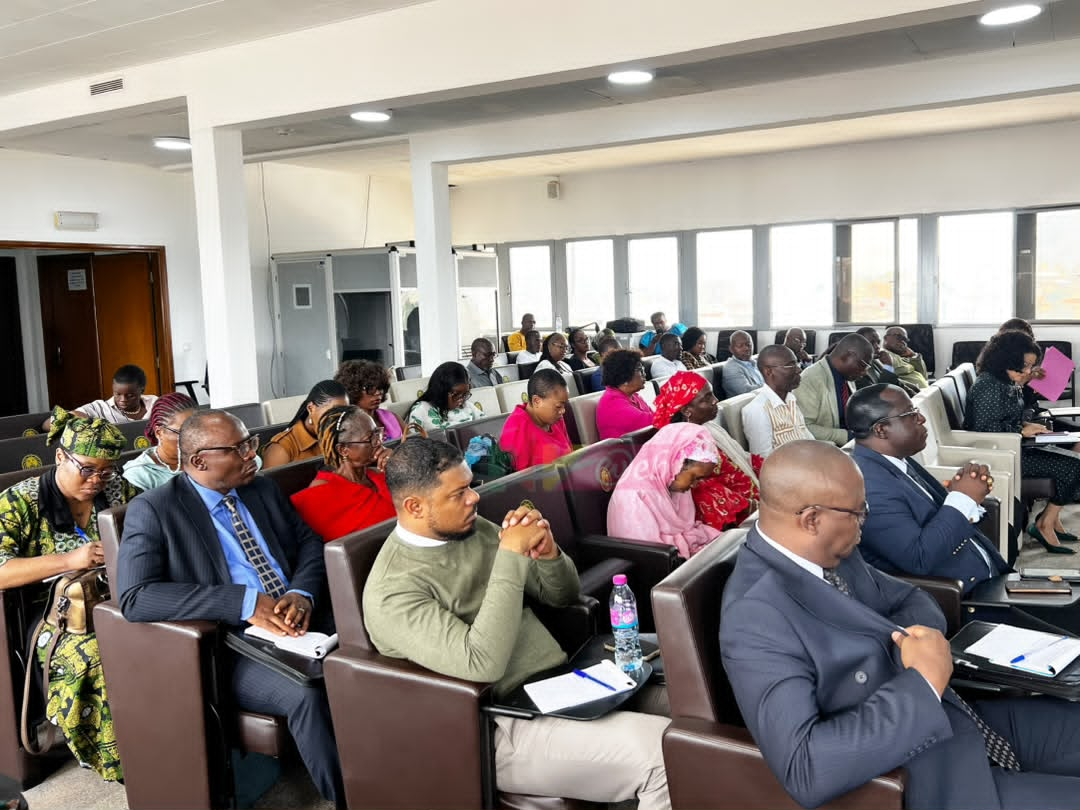
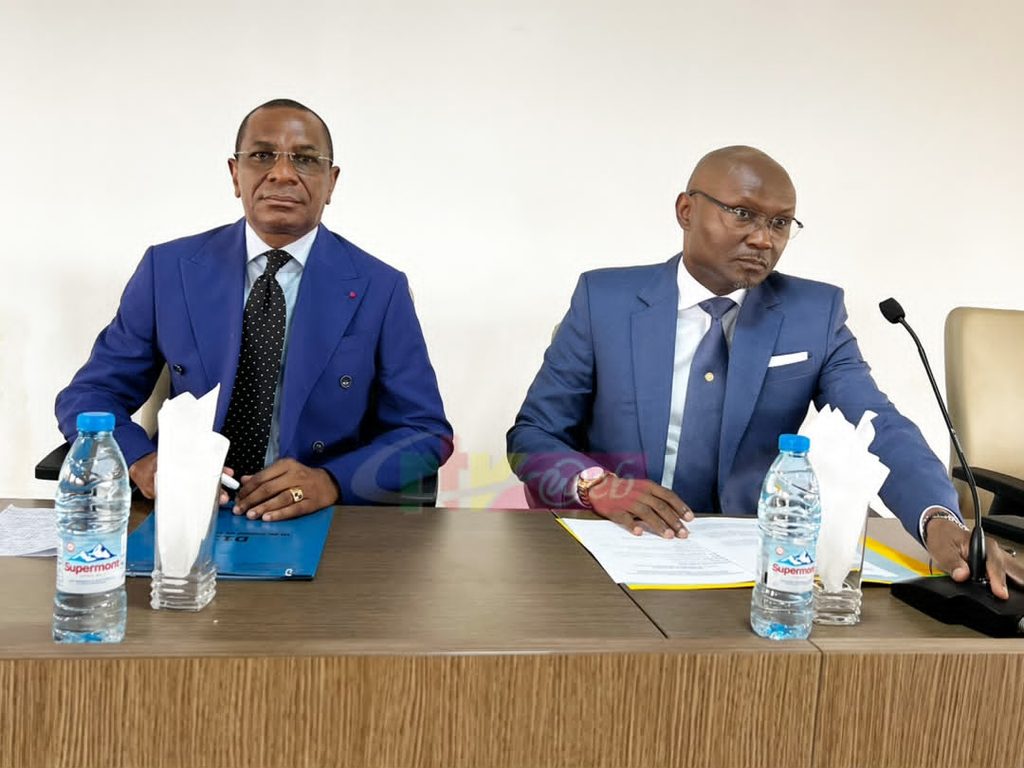
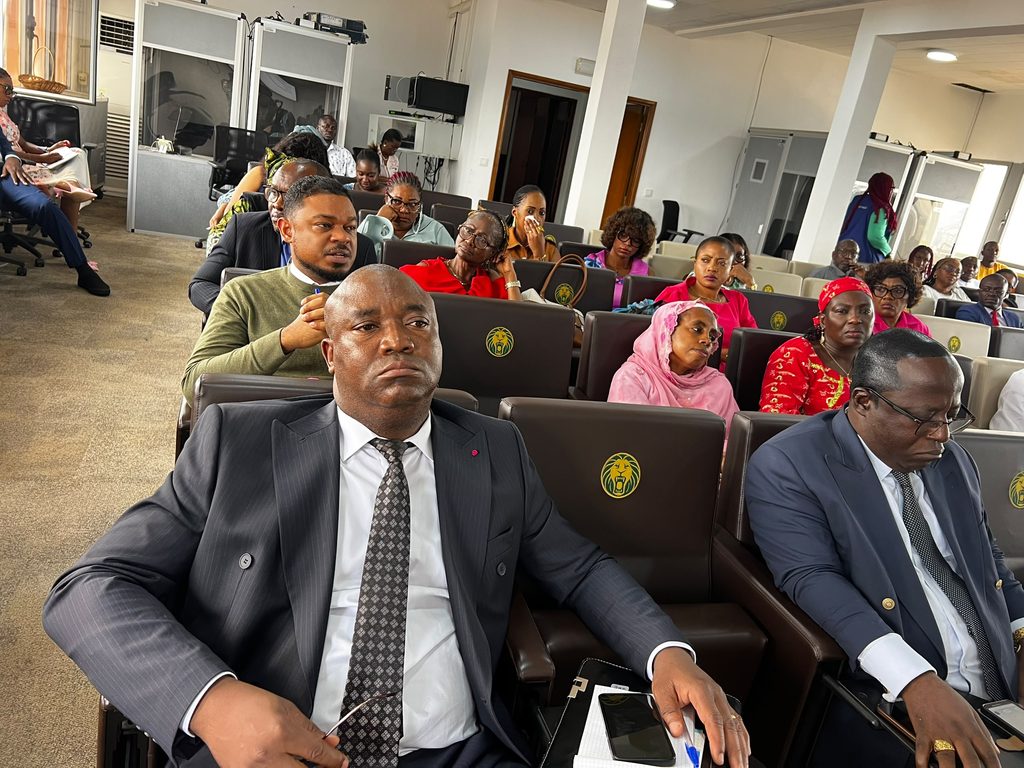
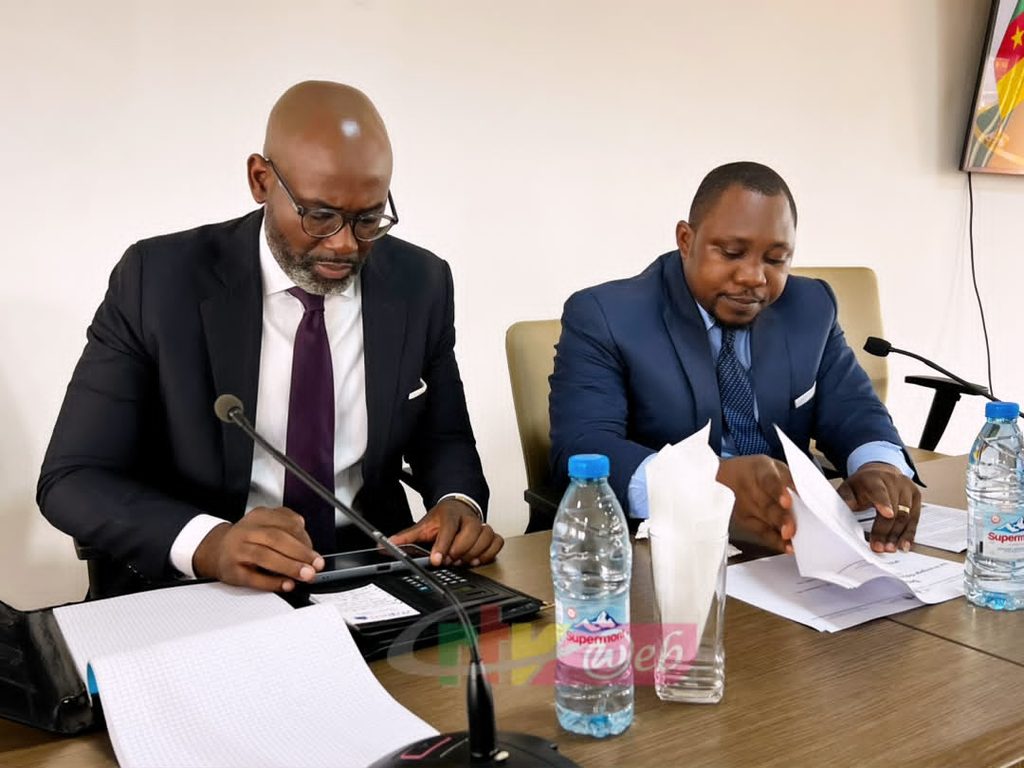
Cameroon’s efforts to address rapid urbanization and improve access to adequate housing have received renewed support from UN-Habitat. This was one of the key takeaways from discussions between the Minister of State, Secretary General of the Presidency, Ferdinand Ngoh Ngoh, and the Executive Director of the United Nations Human Settlements Programme (UN-Habitat), Anacláudia Rossbach.
Speaking after the meeting, Rossbach said discussions focused on the growing challenges of urbanization in Cameroon and across Africa, stressing the need for proper urban planning, housing policies and improved access to basic services.
She noted that while access to adequate housing remains a challenge due to growing demand and high costs, the housing sector can also serve as a strong driver of economic growth through job creation and its extensive value chain.
Rossbach also highlighted Cameroon’s potential in locally produced building materials, traditional construction knowledge and technology. She said the recently launched National Action Plan for Smart Cities will help authorities better understand urbanization trends and respond more effectively to the needs of citizens.
The UN-Habitat Executive Director reaffirmed the agency’s commitment to supporting Cameroon through expertise and global experience in addressing urban development challenges.
On the National Action Plan for Smart Cities, Rossbach explained that UN-Habitat provided technical support and guidance to help local authorities make better use of digital technologies, data and artificial intelligence to improve urban mobility, housing and access to basic services.
She described the launch of the action plan as a significant step forward and commended the initiative led by the Minister of Housing and Urban Development, Célestine Ketcha Courtes.
Rossbach further noted that the launch comes ahead of activities marking World Habitat Day, which will provide an opportunity to assess the country’s housing situation and explore future areas of cooperation.
As her first visit to Cameroon came to an end, Rossbach expressed gratitude for the collaboration between the country and UN-Habitat, reaffirming the agency’s readiness to continue supporting efforts to improve housing, strengthen urban development and build sustainable communities.
The Under Secretary General of the United Nations and Executive Director of UN Human Settlements Programme (UN Habitat), Anaclaudia Rossbach, in an interview to CRTVWEB shed light on her activities in Cameroon and issues discussed during her audience with the Minister of State, Secretary General of the Presidency, Ferdinand Ngo Ngo who received her on behalf of President Paul Biya.
Question: After your meeting with the Minister of State, Secretary General of the Presidency. What can we take home from the meeting?
Answer:
We discussed the challenges of urbanization in Cameroon, as in Africa, more and more people are coming to cities in large numbers. So we talked about the importance of preparing cities to receive citizens through proper planning, through housing policies, and by promoting access to services and basic needs for the people already living in cities.
We said this is a two-sided issue. On one side, we have the challenge, the needs are high, it’s expensive and complex to work in cities, to work on housing. Access to adequate housing is difficult. On the other hand, housing can be used as a very strong economic stimulus because housing is labor-intensive, it has a very large value chain and is an industry in itself.
And, we spoke about the potential that Cameroon has in terms of locally produced building materials, the traditional knowledge that you have, and also the technology we just launched before — the action plan for smart cities in Cameroon. For now, we can use the technology to get more information about urbanization, about the needs and demands of people, and create shortcuts.
We also spoke about the relevance of the UN, the UN system as a whole, and UN-Habitat working here in Cameroon to bring expertise and know-how from other parts of the world to support in addressing the challenges here.
So we spoke about the upcoming General Assembly where we hope these issues will be discussed. We are going to work with Member States in events related to housing to build resilient communities. We spoke about the international processes that UN-Habitat has been participating in strongly and the role it plays. For example, localizing the SDGs, and the support that we have been receiving from Cameroon in doing the work here, and that support for our global mandate.
Question:
You just launched the National Action Plan for Smart Cities. What will be the contribution of UN-Habitat?
Answer
We have developed an international toolbox to support Member States and cities to promote people-centered smart cities. So, we used part of this expertise and know-how to support this Cameroon-led process, led by the Minister of Housing and Urban Development, Minister Célestine Ketcha Courtes, and the Minister of Telecommunications, to offer guidance to localities here in Cameroon and to stakeholders on how to better use technologies, digital transformation, and AI to support development.
Here we are talking about shortcutting processes, we are talking about data, we are talking about urban mobility, energy, access to basic services, and of course looking at informal settlements and looking at housing.
Questions Can you shed more light on the launch today?
Answer Of course, this is a Great initiative led by Minister Courtes. We launched it on Tuesday, September 8, 2026. World Habitat Day is starting, it’s actually a week-long event that will start here very soon in Maroua, and this is part of a global celebration. The theme was: Adequate Housing.
So, we hope that during this week, we will be able to take stock of the housing situation, considering that the Government, under the leadership of President Paul Biya and the Minister, launched this housing program of Two Hundred Thousand Units.
I think this will be a moment for us to look ahead and see what is the next stage of our cooperation. I really would like to express my gratitude to the people of Cameroon for receiving me and for the collaboration with UN-Habitat, and of course to His Excellency, President Paul Biya, for the trust he has put in us and the amazing hospitality in receiving me in this country, in this nation. This is my first mission, my first visit ever to Cameroon.
Sudden withdrawal from friends, family, or social life.
– A visible shift in personality from confident to anxious, hyper vigilant, or withdrawn.
– Unexplained bruises, especially on the arms, wrists, neck, or face, often covered up or explained away as accidents.
– Visible fear of a partner’s reaction to being late, missing a call, or making a small mistake.
Experts urge that once a women is noticed to be in such situations, the first step is to speak to the victim privately and help her find support via a trusted relative, a religious leader, a specialized NGO, or a police / gendarmerie gender desk.
According to Barrister Edwan, women should not wait for physical violence before seeking help.“Threats, stalking, harassment, and intimidation can absolutely be reported before physical violence occurs.
Waiting for physical violence to occur is not required to seek protection or legal intervention.
Go to a police station, or a gendarmerie brigade or call for help using the till free numbers:
– Police: 117
– Gendarmerie: 113
– Ambulance/SAMU: 119
According Jean Roger Ndebi, “The Ministry of Women’s Empowerment and the Family also has departmental delegation and call centers with toll-free number: 1166. The Commission of Human Rights in Cameroon that can also help. They have toll-free numbers 11 and 13.
If you can’t call, experts suggest you make noises. Scream, alert neighbors, shame should never outweigh safety.
BUILDING A SAFETY PLAN
Legal experts also reiterate that there is no need to wait for physical violence.Under Article 301 of Cameroon’s Penal Code, threats alone can form the basis of a criminal complaint.
Under Article 308 of the Criminal Procedure Code, offenses can be established « by any means of proof » — meaning documented threats, messages, and witness accounts all matter.
WHERE TO SEEK HELP IN CAMEROON
Here are a list of some places experts say victims of abuse can turn to in Cameroon, Police gender desks and gendarmerie brigades, some stations now have units meant to handle GBV complaints with more confidentiality; both experts urge insisting on this if available.
Ministry of Women’s Empowerment and the Family, departmental delegations and social centers in most subdivisions, plus the Centre National de Promotion des Femmes in Yaoundé.
The One Stop Centre for Victims of Domestic Violence, under the same ministry (availability varies by region). National Commission on Human Rights and Freedoms also runs toll-free reporting lines.
UN Women Cameroon — provides legal aid and temporary shelter support in some cases. Jean Roger Ndebi, Social Worker, also pointed to civil-society organizations that provide support to survivors. “Associative movement like Action for Welfare and Peace,” he said, adding that “many other NGOs are doing excellent work on the field.”
He also cited Women in Action and UN Women in Cameroon, which he said provide “lasting legal and temporary shelter.”
At least eight cases involving women killed in violent or suspicious circumstances have been reported over roughly eight days in August.
The Ministry of Women’s Empowerment and the Family told the National Assembly in June that around 50 femicides had already been recorded in the first four months of 2026; civil society groups now estimate the year’s total has passed 60 — higher than the same period in 2024 and 2025.
WHAT HAPPENED THIS MONTH:
-Yaounde–Nsimalen Highway (Aug 11): Kenfack Fortune was ejected from a speeding vehicle and died of her injuries hours later.
– Efoulan, Yaounde (Aug 8–9): Diane Yidi Ebabi, 19, was strangled by her boyfriend following a dispute; he kept her body in his room for two days before burying it in a pit. He was arrested nine days later and confessed.
– Tsinga, Yaounde (Aug 21): A woman, mother of three, was killed and decapitated; her body was found hidden under the bed. Her partner fled with the children to Kumba, in the South West Region, before being arrested.
– Douala, (Aug 22): 34-year-old Modestine, was killed with a butcher’s knife by her husband in front of their two young children after he barricaded the doors from inside. Her body bearing multiple deep wounds, one of her hands almost severed.
– Near Meiganga, Adamaoua Region: Rougaïatou Saidou, 38, a trader, disappeared in late July; her body was later found buried near an abandoned house. A suspect, now known to be her companion has confessed to the act.
– Mefou-et-Afamba: A young woman was found dead on a road in what investigators believe was a killing staged to resemble a traffic accident.
– Belabo, Est Region: A young woman was found raped and killed; her attacker has not been identified.
– Yaounde (Aug 26): Beguel Crescence Merline, 44, was found in a hotel room with stab wounds ay her throat, apparently by a man she met online.
RED FLAGS THAT PRECEDE VIOLENCE — WHAT TO WATCH FOR IN A PARTNER
All these incidents paint a disturbing picture of violence that seem to mostly target women. According to Barrister Edwan Ngum Tebe, lawyer and gender-based violence activist, violence does not necessarily begin with physical assault. In an Interview, she states, there are warning signs women and their loved ones should not ignore.
“Some red flags in partners include extreme control: you have a partner who demands access to phones, regulating your dressing choices, or barring you from visiting family or working. Those are red flags. Hyper-jealousy: accusing her of infidelity without cause, and monitoring her movements or locations constantly. We also have explosive anger: breaking objects, punching walls, or making direct or indirect threats to her life or her children’s safety.”
Barrister Edwan Ngum Tebe
Women must be vigilant then and watch out for
Extreme control and jealousy, escalating aggression starting with insults, moving to pushing, then slapping, then choking. Explosive anger directed at objects punching walls, breaking things, brandishing weapons to intimidate, even without direct physical contact. Death threats including indirect ones, Financial control, shifting blame insisting she is responsible for provoking his anger or violence. A sense of ownership language and behavior, Isolation, cutting a woman off from friends, family, religious or community networks.
Another human Rights Activist and Social worker, Jean Roger Gerard Ndebi, states, prevention begins with recognizing the warning signs and refusing to remain silent.
Jean Roger Ndebi
Social Worker / Human Rights Activist
“These are the red flags that precede 90% of feminicide, he noted.
According to both experts, femicide, often follows months of imposed isolation and more often, when a woman announces she is leaving. This moment requires the highest level of caution and support.
The qualifiers for the 2027 Africa Cup of Nations will kick off on September 21, 2026.
Organized by the Confederation of African Football (CAF), 48 nations have been drawn into 12 groups of four and will play across three FIFA windows:
Matchdays 1 and 2 from September 21 to October 6, 2026, Matchdays 3 and 4 from November 9 to 17, 2026, and the final Matchdays 5 and 6 from March 22 to 30, 2027.
In most groups the top two teams will advance to the 24-team tournament, but because Kenya, Uganda, and Tanzania are co-hosts and already qualified, only one additional team will qualify from each of their groups.
The finals, branded TotalEnergies CAF AFCON PAMOJA 2027, are set for June 19 to July 17, 2027 in East Africa.
La Cameroon Radio Television forme ses cadres aux bonnes pratiques protocolaires. C’est dans le cadre d’un séminaire tenu dans les locaux de l’IBC à la Maison de la Radio les 25 et 26 août 2026. La formation portait sur le langage diplomatique, les bonnes pratiques protocolaires, la bienséance et la préséance.
La délégation d’experts venus du ministère des Relations extérieures, était conduite par Edmond Gervais Bindzi Edzimbi, le directeur du protocole, du cérémonial et des affaires consulaires au MINREX.
Pendant les deux jours de travaux, les participants ont échangé sur :
Le protocole d’accueil : appliquer les règles de préséance.
Les cérémonies officielles : maîtriser la gestion et l’ordonnancement.
L’orientation des hôtes : adopter la bonne posture face aux VIP.
La rédaction institutionnelle : respecter l’étiquette dans les invitations.
The Indomitable Lionesses face Malawi this Sunday August 16, in the final of the 2026 Women’s Africa Cup of Nations, with kick-off at 8 p.m. Cameroon time at the Moulay El Hassan Stadium in Rabat, Morocco.
Just hours before this historic showdown, Rabat is holding its breath, while inside the Lionesses’ den, the focus is firmly on the task ahead.
Calm, concentration and determination define the mood as the team puts the finishing touches to its preparations, with one clear objective: give everything on the pitch, fight for the trophy and bring it home to Yaoundé.
On Saturday, both finalists granted their pre-match press conference at the Moulay El Hassan Stadium in Rabat.
The head coach of Cameroon’s Indomitable Lionesses, Valentine Nguele and vice-captain Colette Ndzana responded to questions from the media, shedding light on how the Lionesses intend to approach a Malawian side that has proven physical, disciplined and difficult to break down throughout this tournament.
Cameroon’s coach, Valentine Nguele and vice-captain Colette Ndzana both emphasised collective play, determination and team spirit.
Cameroon’s Prime Minister – Head of Government, arrived in Rabat – Morocco to attend the #WAFCON2026 final behalf of the President of The Republic.
Upon arrival, the Head of Government was received by Cameroon’s Ambassador to Morocco Mouhamadou Youssifou.
The Prime Minister’s delegation is made up of a couple of members of government and other personalities met with the Lionesses and extended the encouragement of the Head of State and the support of the Cameroonian people to them.
Among the items displayed at the Yaounde International Tade Fair for Arts and Crafts (SIARC) at the esplanade of the National Museum, are a variety of cosmetic products to resolve problems of black skin and hair. Young female university graduates are using local ingredients from time immemorial to enhance beauty. They have produced bathing soaps, body lotion, oils, shampoo and hair masks to treat natural Afro hair.
Using Local Ingredients to Solve Beauty Problems
Tchingwi Prescilia, an Environmental Science graduate, had challenges with caring for her hair. She used relaxers which caused much damage on her scalp. She resolved to keep her Afro hair. She therefore had to buy imported products to take care of her natural hair. COVID 19 came in, causing the borders to be blocked and limiting importation.
This situation inspired her to start producing her own hair products using local ingredients. « I use rosemary, shea butter, cocoa butter, hibiscus flowers and cloves to produce hair oils, hair masks, shampoo, hair cream and musk for natural Afro hair ». She sells these products to users in different towns in Cameroon.
She also runs a hair beauty salon where she uses these products to provide hair care to women.
For her part, Tangwan Mourine, suffered severe skin problems. Acute acne pushed her to find solutions from her own environment. « I use aloe vera, tumeric, cacia alata plant and bitter leaves to produce soap for troubled skin, » she says. Alongside, she makes detergent from local ingredients, and bleach which she sells at exhibitions.
Transfering Ancestral Knowledge to Modernity
The Cameroon International Trade Fair for Arts and Crafts (SIARC) 2026 emphasized on transfering knowledge from the older generation to the younger one. One of the artisans, Jumbuin Ruth Maya, a graduate in Pharmaceutical Chemistry and a student in Public Health Medicine, presented a first aid remedy made of two plants which her mother used to treat cases of food poisoning and insect bites.
She presented Medi Quick a transformed version of the ‘miracle leaf’ and neem leaves as first aid for food poisoning. She has worked with her mother to come out with the scientific value of the herbs used by her foreparents to treat cases of food poisoning and insect bites.
Most of the artisans at the SIARC 2026 presented products which have witnessed a transformation from rudimentary to modernism, increasing their shelf life, packaging and value. This is the case of Maimouna Alhadji, a graduate of engineering from the University of Ngounderé who presented hair butter extracted from cow milk. This is used to soften hair by mostly Fulani people. She has succeeded in taking out the pungent odour and replacing it with a pleasant perfume.
As the Trade Fair wraps up, most artisans have successfully displayed their works of art and engaged in more marketing especially on social media.
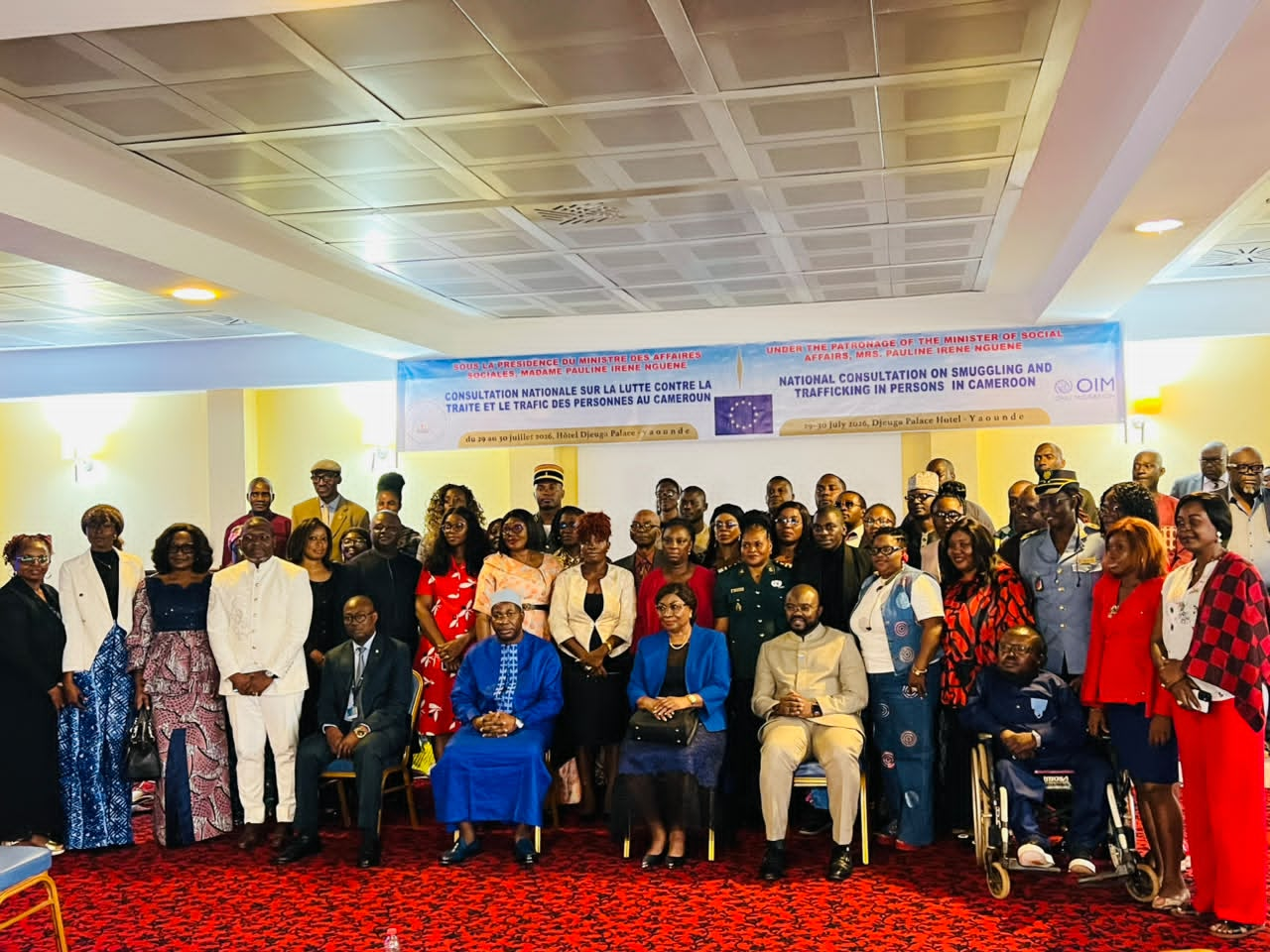
For two days, government officials, United Nations agencies, civil society organisations, development partners and survivors of human trafficking gathered in Yaoundé to examine one of the most pressing migration challenges facing Cameroon: trafficking in persons and the smuggling of migrants.
Organised by the Platform for Dialogue and Exchange between the Government and Civil Society, in partnership with the International Organization for Migration (IOM), the national consultation ended with a series of recommendations expected to shape Cameroon’s first National Migration Policy.
The discussions highlighted persistent challenges, including weak institutional coordination, inadequate data collection and sharing, limited resources for victim assistance, evolving criminal networks and the growing use of digital platforms by traffickers.
Survivor’s testimony puts a human face on trafficking
One of the most emotional moments of the consultation came when survivor Rose Kanjo recounted her experience after being trafficked to Kuwait in 2015.
Promised a teaching job by a relative, she instead found herself trapped in domestic servitude.
“I worked 19 to 20 hours every day. I slept on the floor, ate leftovers, had no access to a phone and endured physical, emotional and sexual abuse,” she told participants.
Although her family eventually paid a ransom of 4,000 US dollars, Kanjo said she still had to devise a way to recover her passport and escape from her employer before returning to Cameroon.
Her testimony served as a stark reminder of the realities behind fraudulent overseas recruitment schemes and reinforced calls for stronger prevention and protection measures.
A roadmap for stronger action
Participants agreed that trafficking in persons and migrant smuggling should become a priority pillar of Cameroon’s future National Migration Policy.
Recommendations adopted during the consultation include strengthening national coordination mechanisms, reviewing the legal framework to better align with international standards, improving the collection and sharing of migration data, increasing sustainable funding for anti-trafficking programmes and establishing a harmonised national referral system for victims.
Delegates also called for nationwide awareness campaigns, particularly in vulnerable communities and border areas, while recommending the integration of migration and anti-trafficking modules into the training of magistrates, security personnel, social workers and other frontline professionals.
The consultation further stressed the need for comprehensive assistance to victims, including medical, psychological, legal and economic support, alongside programmes that promote long-term reintegration.
United Nations unveils child protection initiative
Representing the United Nations System in Cameroon, officials warned that conflicts, displacement, poverty and climate-related pressures continue to increase children’s vulnerability to trafficking, particularly in the North-West and South-West regions.
The UN announced plans for a new project targeting children exposed to trafficking and exploitation in the two regions. Under the leadership of the Ministry of Social Affairs, the initiative is expected to directly benefit nearly 3,000 people while positively impacting about 15,000 others, including families and communities.
The project will focus on expanding child protection services, preventing online-facilitated trafficking, strengthening victim identification and referral mechanisms and improving the capacity of institutions responsible for investigations and prosecutions.
In a joint declaration marking the World Day Against Trafficking in Persons, the United Nations Migration Network in Cameroon also called for multidisciplinary victim support centres, stronger legal reforms, improved law enforcement capacity and greater collaboration among public institutions, civil society and local communities.
Government pledges sustained commitment
Closing the consultation, the Minister of Social Affairs, Pauline Irène Nguene, described trafficking in persons as an established reality in Cameroon that requires coordinated national action.
She acknowledged that while assistance to victims remains essential, greater emphasis must also be placed on prosecuting traffickers and dismantling criminal networks.
The minister announced that the recommendations from the consultation will feed into the finalisation of Cameroon’s National Migration Policy and guide future sectoral interventions.
She also welcomed the continued support of the International Organization for Migration, notably its commitment to expand the migrant transit and reception centre to improve services for vulnerable migrants.
As Cameroon commemorates the World Day Against Trafficking in Persons, the outcomes of the consultation reflect a growing determination among government, international partners and civil society to move beyond dialogue and strengthen concrete action against a crime that continues to threaten the country’s most vulnerable populations.
The effective implementation of the African Continental Free Trade Area has once again taken centre stage as experts from across the continent gather in Yaounde to identify practical measures for accelerating Africa’s economic integration.
Convened by the United Nations Economic Commission for Africa, the four-day workshop is focusing on eliminating non-tariff barriers, modernising customs systems, strengthening regional value chains, and promoting industrial transformation to unlock the full potential of intra-African trade.
Participants are also exploring strategies to empower small and medium-sized enterprises, women, and young entrepreneurs, whose active participation is essential to building an inclusive, competitive, and prosperous continental market.
For Cameroon, the meeting presents a strategic opportunity to consolidate its position as a regional trade hub while contributing to the successful implementation of the African Continental Free Trade Area and Africa’s broader vision of economic integration.