Catégorie : Diplomatie

  • 60th Ahmadiyya Muslim Convention: Over 40,000 Gather in UK


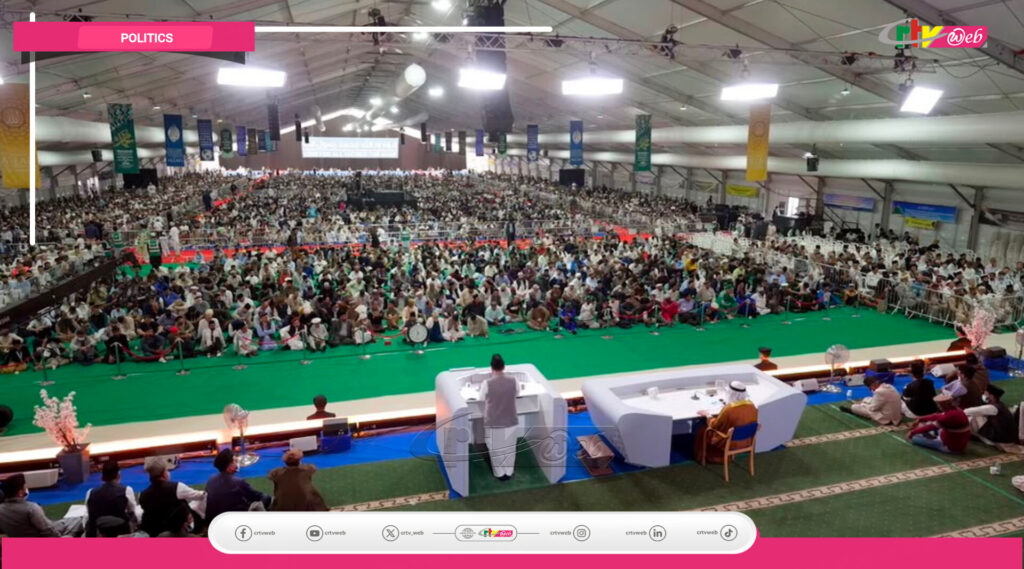
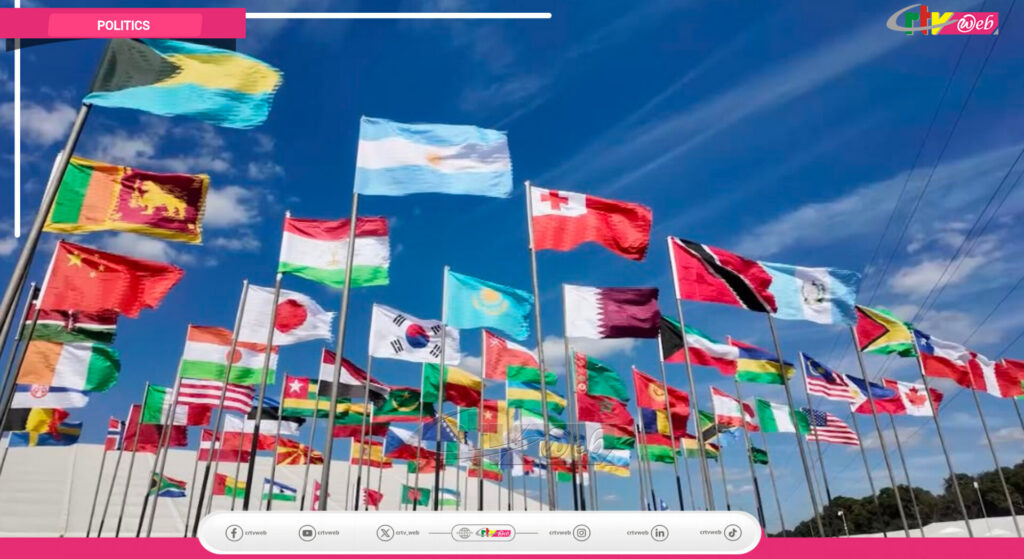
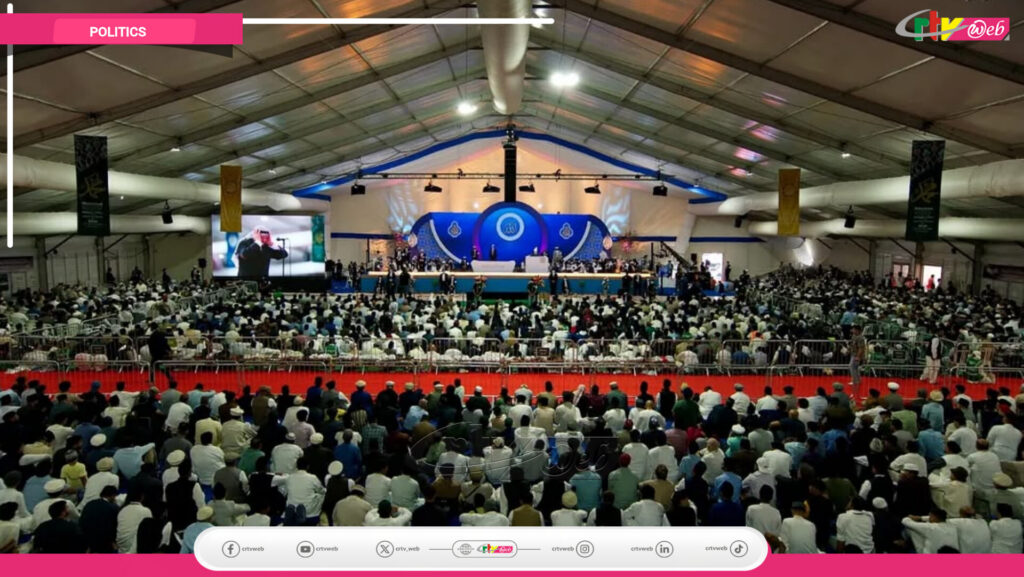
    More than 40,000 participants from over 90 countries converged in the United Kingdom for the 60th edition of the Jalsa Salana, the annual convention of the Ahmadiyya Muslim Community in Alton, Hampshire, United Kingdom.

    Held from July 24 to 26, the three-day gathering served as a platform to deepen religious knowledge while promoting peace, unity, and mutual understanding among people of diverse national and cultural backgrounds. Attendees engaged in religious teachings and discussions on pressing contemporary issues, with addresses from religious scholars, parliamentarians, diplomats, and civic leaders underscoring the value of dialogue, mutual respect, and peaceful coexistence.

    Cameroon’s Participation and Humanitarian Efforts

    Speaking at the event, the National President of the Ahmadiyya Community in Cameroon, Alhadji Balla Ibrahim Baba, noted that the world is navigating a difficult period, making it essential for humanity to find pathways to peaceful living, regardless of religious differences.

    He highlighted the Community’s humanitarian projects in Cameroon, including the construction of a school in Fulap, Noun Division, West Region, and the drilling of 156 boreholes across nine regions. « We are not all equal, and if people are in difficulties, it is our responsibility, if we have the means, to assist them if we are to live in peace, » Alhadji Balla stated.

    Voices from the Continent

    For Gabourey Souleyman, a participant from Burkina Faso, the convention is a vital avenue for sensitising the world to the urgent need for peace.

    Abdelazeez Duro, from Nigeria, who attended with his nephews, said the values that unite the Community are holding firmly to the « rope » of Allah and seeking the guidance of its spiritual leader. « If humanity as a whole hearkens to the motto of Ahmadiyya ‘Love for All, Hatred for None’ I believe we all can live in harmony, » he said.

    Keynote Addresses by Global Head

    A central feature of the convention was the participation of His Holiness Hazrat Mirza Masroor Ahmad, the Worldwide Head of the Ahmadiyya Muslim Community, who delivered keynote addresses on each of the three days. His speeches focused on Islamic teachings and their relevance to addressing modern global challenges.

    About the Ahmadiyya Muslim Community

    Founded in 1889 by Hazrat Mirza Ghulam Ahmad in Qadian, India, the Ahmadiyya Muslim Community emphasises the peaceful teachings of Islam, devotion to God, and selfless service to humanity. Today, the Community is established in more than 210 countries and territories, leading initiatives in peacebuilding, human rights, interfaith dialogue, and humanitarian service.

    The United Kingdom chapter, established in 1913, now comprises over 130 branches and continues to uphold the Community’s enduring motto: « Love for All, Hatred for None. »

    Moity Uwaifo Akonjang
  • Ahmadiyya Muslim Community Unveils 2026 Global Progress Report at Jalsa Salana UK

    Ahmadiyya Muslim Community Unveils 2026 Global Progress Report at Jalsa Salana UK

    The Worldwide Head of the Ahmadiyya Muslim Community, Hazrat Mirza Masroor Ahmad, Khalifatul Masih V, has unveiled the Community’s 2026 Global Progress Report, highlighting significant worldwide growth in the propagation of Islam Ahmadiyyat over the past year.

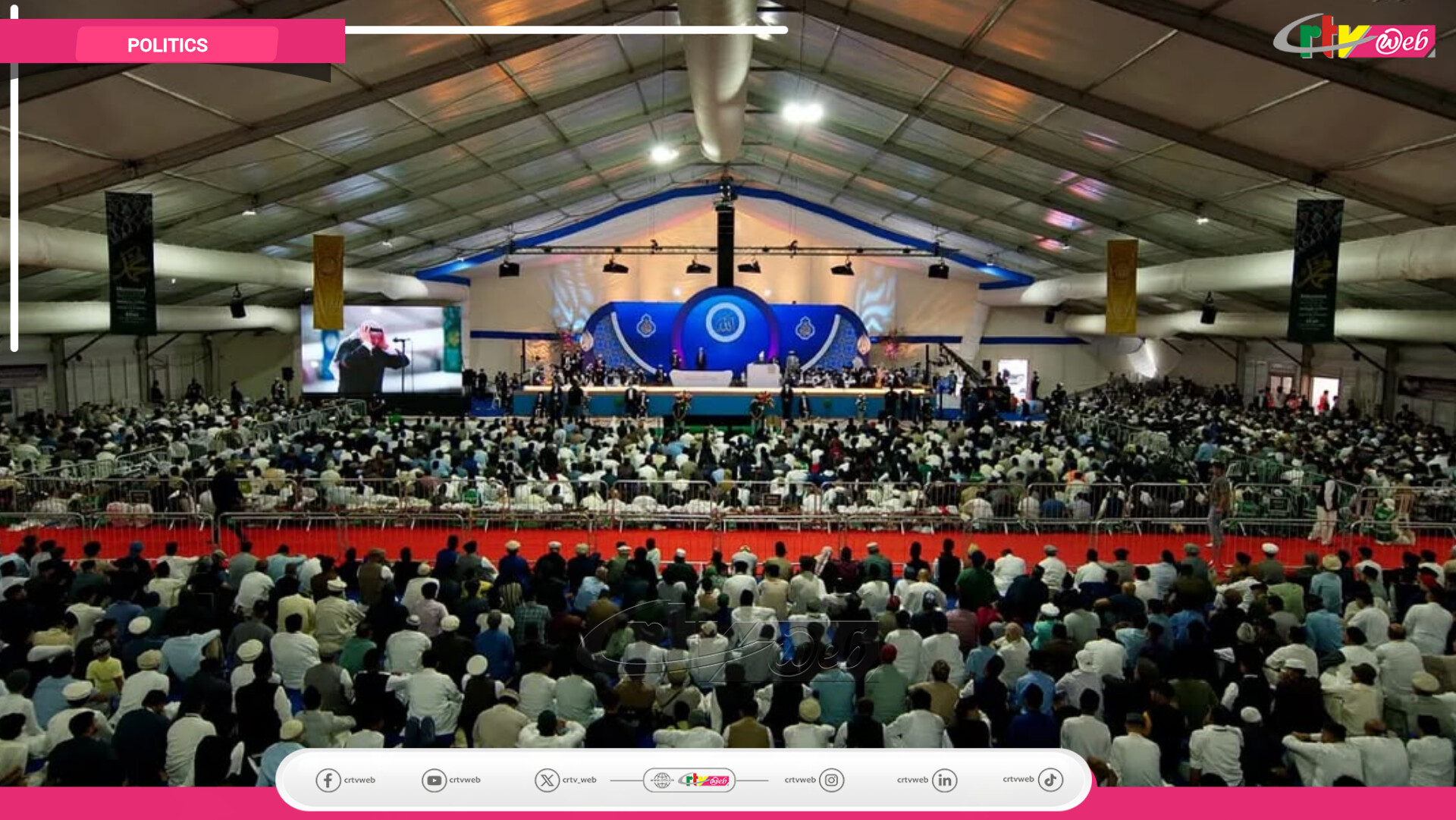
    The report was presented during the concluding session of the 60th Annual Jalsa Salana UK at Hadeeqatul Mahdi in Alton, Hampshire, United Kingdom, before an audience of more than 50,000 participants and guests from over 100 countries.

    According to the report, 267,596 people embraced Islam Ahmadiyyat during the reporting period, with the Community now spread across more than 600 nationalities and ethnic groups worldwide.

    The report also outlines major milestones achieved during the year, including the establishment of 398 new congregations in 811 locations, the construction of 133 new mosques, the acquisition of 49 additional mosques, the opening of 127 new mission houses, and the establishment of 40 new hospitals to expand humanitarian services.

    It further highlights the continued translation of the Holy Qur’an into additional international and local languages, alongside the distribution of millions of pieces of Islamic literature aimed at promoting the peaceful teachings of Islam.

    Presenting the report, Hazrat Mirza Masroor Ahmad attributed the Community’s continued expansion to the blessings of Allah and the dedication of Ahmadi Muslims across the world in spreading Islam’s message of peace.

    Regionally, Indonesia recorded the highest number of new members in Asia, followed by India and Bangladesh.

    Beyond presenting the annual achievements, the Worldwide Head of the Ahmadiyya Muslim Community used the occasion to reiterate his call for global peace and justice amid ongoing international conflicts.

    “I firmly believe there is only one way to end these wars, by ensuring that justice prevails,” he said.

    The annual convention, one of the largest gatherings of the Ahmadiyya Muslim Community, continues to bring together delegates from around the world to promote faith, unity, service to humanity and the pursuit of lasting peace.

    Moity Uwaifo Akonjang

  • 16th Commonwealth Regional Conference of Heads of Anti-Corruption Agencies in Africa Opens in Yaoundé

    16th Commonwealth Regional Conference of Heads of Anti-Corruption Agencies in Africa Opens in Yaoundé

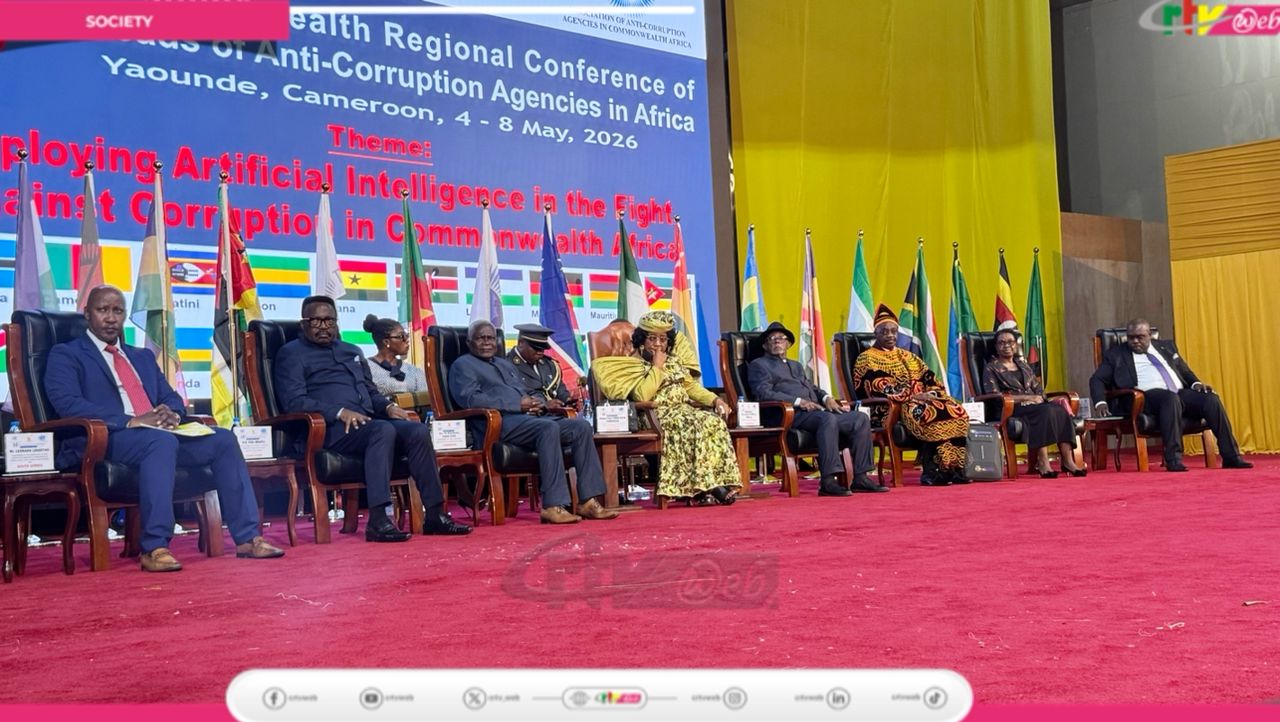
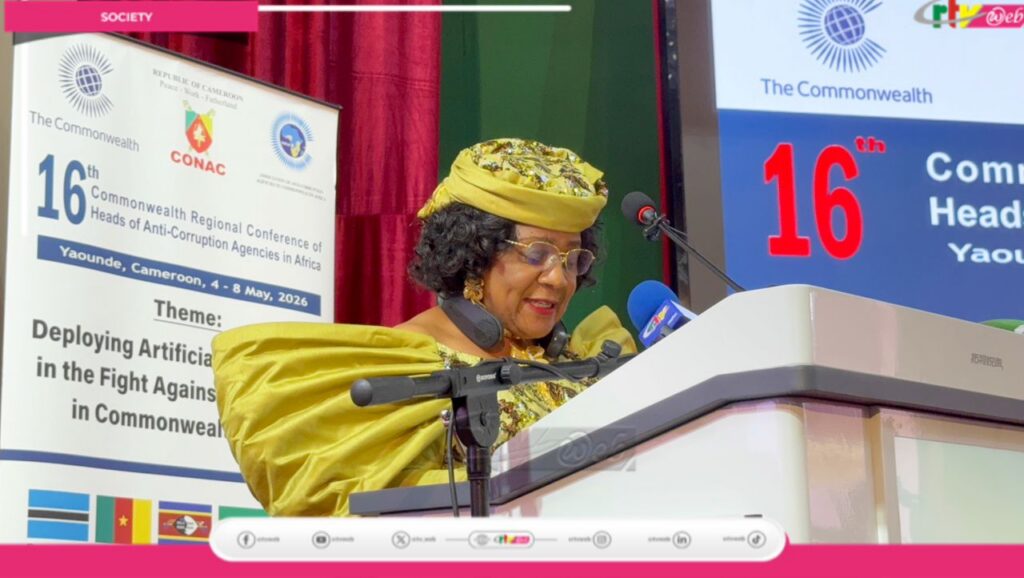
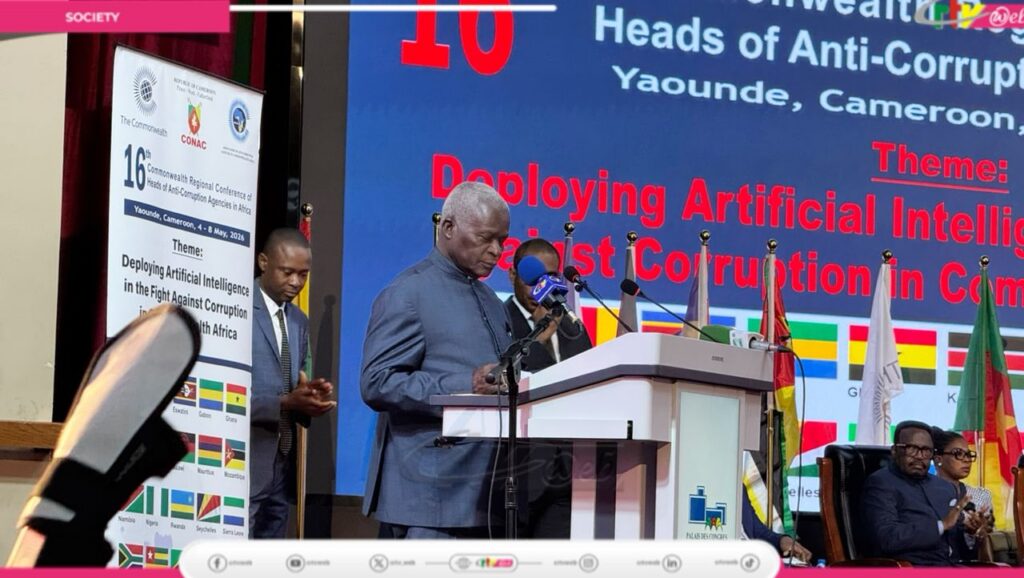
    Over 80 participants from 21 countries are taking part discussions and group works at the ongoing 16th Commonwealth Regional Conference of Anti-Corruption Agencies in Africa organized in Yaounde, Cameroon.

    Opening the Conference, the Representative of the Head of State, Minister Delegate at the Presidency in charge of Supreme State Audit, Mbah Acha Rose described the gathering as a remarkable platform for leading dialogue and actions in building societies where corruption has no place.

    She highlighted Cameroon’s National Development Agenda blended with technology driven solutions and digital transformation mechanisms created to enhance transparency, accountability and reduce fraud.

    The Chairman of the Anti- Corruption Commission, CONAC, Rev. Dr. Dieudonne Massi Gams who welcomed the participants noted that the conference will focus on reinforcing shared commitment in combatting corruption in the continent and beyond.

    Marked by an exceptional cultural display of the diversity of Cameroon and Africa, the various speakers insisted that transparency, accountability, integrity, collaboration and the use of AI will drive impactful change across Africa.

  • Pope Leo XIV Visits Cameroon in April 2026

    The Civil Cabinet of the Presidency of the Republic of Cameroon, has announced the head of the Roman Catholic Church, Pope Leo XIV to Cameroon from April 15 to 18, 2026.

    According to the release, the Pope will travel to Douala, Bamenda and Yaounde.

    The Holy See press office also indicated that the Pope will be on a ten day Apostolic Journey to Africa. He is scheduled to Algeria, Cameroon, Angola and Equatorial Guinea from April 13 to 23.

    An Apostolic Journey that will take him in the footsteps of Saint Augustine in Algeria, where he will visit Algiers and Annaba; then visiting Cameroon in Central Africa, with stops in Yaoundé, Bamenda and Douala; Angola, where he will visit Luanda, Muxima and Saurimo; and finally, Equatorial Guinea, where he will visit Mala, Mongomo and Bata.

    Papal Visits To Cameroon

    Pope Leo XIV is the third Sovereign pontiff to visit Cameroon after that of two popes have officially visited the country on three separate occasions:

    Pope John Paul II (1985): Visited from August 10 to 14, 1985. During this four-day trip, he traveled to Yaoundé, Douala, Garoua, and Bamenda.

    Pope John Paul II (1995): Visited for a second time from September 14 to 16, 1995. The primary purpose was the proclamation of the Post-Synodal Apostolic Exhortation, Ecclesia in Africa, in Yaoundé.

    Pope Benedict XVI (2009): Visited from March 17 to 20, 2009. This was his first trip to the African continent as Pope, during which he promulgated the Instrumentum laboris for the Second Special Synod for Africa.

    Pope Leo XIV: Early Life

    Pope Leo XIV, prior to his election was known as Cardinal Robert Francis Prevost. He was the Prefect of the Dicastery for Bishops.

    The 267th Bishop of Rome was born on September 14, 1955, in Chicago. He is the first Augustinian Pope, and the second Pontiff after Pope Francis to come from the Americas.
    He spent many years as a missionary in Peru before being elected head of the Augustinians for two consecutive terms.

    First Augustinian Pope
    The new Bishop of Rome , Illinois, to Louis Marius Prevost, of French and Italian descent, and Mildred Martínez, of Spanish descent. He has two brothers, Louis Martín and John Joseph.

    He spent his childhood and adolescence with his family and studied first at the Minor Seminary of the Augustinian Fathers and then at Villanova University in Pennsylvania, where in 1977 he earned a Degree in Mathematics and also studied Philosophy.

    On September 1 of the same year, Prevost entered the novitiate of the Order of Saint Augustine (O.S.A.) in Saint Louis, in the Province of Our Lady of Good Counsel of Chicago, and made his first profession on September 2, 1978. On August 29, 1981, he made his solemn vows.

    The future Pontiff received his theological education at the Catholic Theological Union in Chicago. At the age of 27, he was sent by his superiors to Rome to study Canon Law at the Pontifical University of Saint Thomas Aquinas (Angelicum).

    Elvis Teke

  • Lutte contre le terrorisme: la police camerounaise mieux outillée

    24 policiers formés dans le domaine du déminage, ont reçu ce 2 mai 2024 à Yaoundé, leurs diplômes de fin de formation du stage de déminage niveau 1.

    La cérémonie avait pour cadre l’Ecole nationale supérieure de Police de Yaoundé et était présidée par le Délégué général à la Sûreté nationale, Martin Mbarga Nguélé et l’ambassadeur de France au Cameroun, Thierry Marchand, en présence de nombreux membres du corps diplomatique.

    Objectif de la formation

    Organisée par la Coopération française et la Délégation générale à la Sûreté nationale (DGSN), cette formation avait pour objectif de doter la DGSN d’une capacité en déminage afin de protéger les populations camerounaises contre le risque explosif. L’ambassadeur de France au Cameroun relèvera d’ailleurs à cet effet qu’une dizaine d’incidents liés aux explosions de munitions et autres engins improvisés ont lieu chaque jour avec comme victimes, les populations civiles.

    Pour Thierry Marchand, « le continent africain n’est pas exempt de cette menace, le Cameroun non plus. D’où la volonté des autorités camerounaises de faire face à ces risques et menaces». À en croire Martin Mbarga Nguélé, ce renforcement des capacités en déminage est une étape très importante dans la coopération policière France-Cameroun, car, au-delà de permettre au pays de relever les défis sécuritaires actuels, elle traduit également la modernisation de la police camerounaise pour la sécurité renforcée du Cameroun.

    La formation

    Cette première formation du genre aura duré quatre semaines avec des enseignements dispensés par deux experts français en déminage. Selon, l’un des stagiaires, l’officier de police Henri Abada, ces enseignements ont été faits en deux phases: « la première phase était purement théorique à travers la maîtrise de certaines terminologies et l’identification visuelle du matériel qui a été le nôtre pendant les quatre semaines de formation. La deuxième phase, quant à elle était pratique. Pour cela, nous nous sommes rendus sur le terrain du côté de Mbankomo sur le site de démolition de la Sûreté nationale. Là-bas, nous sommes passés à la mise en pratique de ce qui a été fait en salle ». Aujourd’hui, ces 24 policiers formés en déminage, niveau 1, peuvent reconnaitre une munition et analyser la menace, sécuriser la zone de démolition et détruire la mine sur place.

    Ces policiers pourront poursuivre leur formation en deuxième, puis en troisième année. Le prochain stage étant fixé au mois de juin 2024 pour le niveau 2. À cet effet, Martin Mbarga Nguélé a salué la dotation en équipements opérationnels de la France au Cameroun. L’objectif étant de doter en trois ans, les dix régions des équipes de démineurs. En attendant, le délégué général à la Sûreté nationale demande aux policiers ainsi formés, de s’appliquer en vue d’une maîtrise des connaissances acquises et d’en faire une application appropriée, pour permettre à notre pays de rester à la hauteur des défis actuels.

    Aline-Florence Nguini

  • MINREX: les travaux de construction du centre de digitalisation lancés

    La pose de la première pierre de l’édifice  qui sera bâti sur une surface de 3000 m2 avec 4 étages dont un sous-sol, a eu lieu ce 16 décembre au centre administratif à Yaoundé, sis à Dragages-Mballa 1.

    La cérémonie était présidée par le ministre des Relations extérieures, Lejeune Mbella Mbella, représentant personnel du chef  de l’Etat, Paul Biya. C’était en présence de plusieurs membres du gouvernement, de chefs de missions diplomatiques, des membres du parlement et du gouverneur de la région du Centre.

    Moderniser l’appareil diplomatique

    Occasion pour le ministre Lejeune Mbella Mbella de souligner l’objectif de la construction du Centre de Transformation digitale du ministère des Relations extérieures (CTDM). Il s’agit, selon le membre du gouvernement, de faire progresser, le “vaste” volet de digitalisation des services de son département ministériel, ainsi que les  documents y relatifs. Un projet lancé depuis un an seulement avec en ligne de mire, le projet E-Visa qui vise entre autres :

    -La facilitation des procédures pour les visiteurs désireux de se rendre au Cameroun;

    -La sécurisation des frontières à travers l’uniformisation des procédures;

    -La traçabilité des données statistiques et financières générées par la

    plateforme www.evisacam.cm;

    -L’amenuisement de la distance entre les usagers et les services consulaires du

    Cameroun.

    La digitalisation en marche au MINREX

    Pour la concrétisation de cette «volonté du chef de l’Etat », le ministre des Relations extérieures a été autorisé à signer un contrat en mode BOT (Build-operate-transfer) avec le partenaire technique, “Impact Palmarès RD SAS”, pour une durée de dix ans renouvelables. À cet effet, Lejeune Mbella Mbella a demandé aux uns et aux autres d’être patients et de persévérer dans l’effort pour faire avancer l’objectif fixé. Cependant, un an après le lancement du processus de digitalisation au sein de son ministère, le MINREX, se réjouit de ce que le système mis en place est en marche et est irréversible.

    De l’avis des administrations partenaires, relève Lejeune Mbella Mbella, les résultats sont positifs. À l’instar de la sécurisation des recettes de la trésorerie de l’Etat et du projet e-visa. À cela viennent s’ajouter, dira-t-il, de nombreux témoignages des membres de la diaspora, qui expriment leur appréciation vis-à-vis de cette innovation qui leur facilite les démarches de traitement des dossiers de demandes de visas. Des visas qui, selon lui, s’obtiennent désormais en 24 et 72 heures maximum après vérification de toutes les mesures conformes à leur entrée au Cameroun.

    Un arrimage aux standards internationaux, grâce à une coopération Sud-Sud, saluée par le président du groupe “Impact Palmarès RD SAS”. Le Béninois Giresse Tella qui a pris la parole pour la circonstance, s’est engagé à mener les travaux de manière à ce que l’édifice soit livré dans les plus brefs délais. Une date sera d’ailleurs avancée à cet effet par le ministre des Relations extérieures qui a demandé à l’entreprise de livrer les travaux entre avril et mai 2025.

    Aline-Florence Nguini