Catégorie : Santé

  • VIH-SIDA: la prise en charge franchit une nouvelle étape

    C’est à travers le projet VIHEILLIR soutenu par la France et dont la deuxième phase a été lancée ce 19 juin 2024 à Yaoundé.

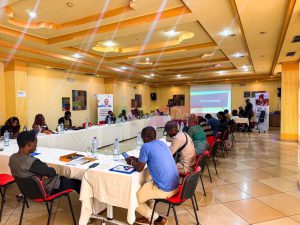
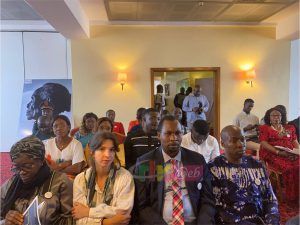
    C’était au cours d’une double cérémonie qui marquait également la fin de la première phase. Placés sous la présidence du secrétaire permanent du Comité national de lutte contre le Sida, Dr Joseph Fokam, les échanges ont permis d’établir le bilan de la première phase de ce projet dont l’objectif principal est d’améliorer la qualité de vie des personnes âgées de plus de 50 ans vivant avec le VIH et/ou des maladies chroniques. Ceci dans les deux structures de prise en charge, à savoir l’hôpital militaire de Yaoundé et l’hôpital de district de Bafia.

    Stratégie mise en place
    Il apparaît ainsi que pour ce projet lancé en juin 2021, 807 patients ont été recensés à l’hôpital militaire de Yaoundé, 548 patients à l’hôpital de district de Bafia et 3 546 suivis dans des cliniques. La stratégie adoptée a notamment porté sur trois aspects sur le plan clinique:

    -Simplification et standardisation des protocoles, algorithmes de prise en charge pour toutes les comorbidités;

    -Négociation avec les sites pour des

    diagnostics simples et peu coûteux, puis prescription des médicaments génériques à coût réduit;

    -Formations des personnels des sites de prise en charge, équipement en matériel de dépistage, accompagnement pour le suivi à long terme.

    Difficultés surmontées

    Une stratégie mise en place malgré des difficultés rencontrées sur le terrain dont les plus récurrents étaient: les faibles compétences sur la santé communautaire, les sites de prise en charge peu préparés à l’intégration de nouvelles approches et la barrière financière considérée comme l’obstacle majeur au dépistage en clinique et au suivi des comorbidités.

    Des efforts qui ont permis d’aboutir à des résultats probants à savoir :

    -De meilleures connaissances des soignants sur l’importance de la prise en charge des comorbidités;

    -Toutes les comorbidités ciblées sont dépistées et traitées à moindre coût ou gratuit;

    -La prévention et l’accompagnement

    communautaire assurés par les associations;

    -Une bonne dynamique entre associations.

    Selon Jean-Baptiste Dufourcq,

    conseiller régional santé de l’Ambassade de France, la deuxième phase du projet devrait poursuivre sur la même lancée, avec cette fois l’ajout de la ville de Sangmelima parmi les villes bénéficiaires après Yaoundé et Bafia.

    Aline-Florence Nguini
  • Bertoua Regional Hospital Centre: The Ultramodern facility goes operational

    Populations of the East region will henceforth receive a wide range of quality health care services from the Bertoua Regional Hospital Centre.

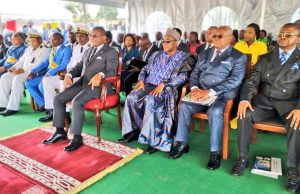
    The health facility was inaugurated on 10th June 2024 by the Prime Minister, Head of Government, Joseph Dion Ngute, personal representative of the Head of State.

    The Prime Minister, Head of Government, Joseph Dion Ngute, personal representative of the Head of State, inaugurated the Bertoua Regional Hospital Centre on 10th June.

    “This magnificent structure which catches our attention, is government’s implementation of the strategic vision to improve the living conditions of Cameroonians. It focuses on human capital which is capable of improving economic growth,” the Prime Minister said.

    Thousands of residents of the East regional capital, a host of government members, and other top ranking personalities turned out massively to witness the inauguration of the architectural jewel.

    Among them was the Minister of Public Service and Administrative Reforms, and elite of the region, Joseph Le who said he was elated to see such a masterpiece of a health facility constructed in the East regional capital, Bertoua.

    “What an architectural jewel; what modernity in terms of accessibility and quality. Who would have believed this five years ago?” Minister LE marvelled.

    Over 700 Consultations in Seven Weeks

    The Bertoua Regional Hospital Centre opened its doors to patients on 19th April 2024, with a total of 700 consultations on record.

    The first services to go operational were the emergency, laboratory and imaging services. All other services are now available and offer high quality health care services to patients.

    Admissions, surgery, emergencies and maternity care are among services in high demand. Almost two months after the health facility opened, close to 800 laboratory tests have been carried out, with 235 of them in medical imaging.

    The Bertoua Regional Hospital Centre already has a functional blood bank which was constituted thanks to a blood donation campaign carried out by internal staff of the hospital.

    The health facility counts about 250 staff, including 90 civil servants, 16 medical doctors, 7 specialists including a surgeon, a neurosurgeon, a cardiologist, pulmonologist, a rheumatologist, an anesthesiologist-resuscitator, a doctor specialized in medical imaging and 9 general practitioners.

    Paramedical personnel constitute 116 professionals including 06 specialized senior nurses, 60 State Registered Nurses, 76 Nursing Assistants, 26 laboratory technicians, 5 engineers and medical imaging technicians, 4 mortuary attendants, 4 civil engineering personnel and 30 maintenance workers.

    The architectural jewel is seated on a five-hectare piece of land, with about 12,000 metres squaredfully occupied. It contains 12 buildings comprising 102 beds, 90 conventional wards, and 12 beds at the intensive care unit.

    The Bertoua Regional Hospital Centre is a second-degree hospital, and the 4th Hospital Centre to be inaugurated by the Prime Minister, after that of Bafoussam, Ebolowa and Garoua.

    A facility of this scale, with multiple departments and a high patient turnover, requires not only medical expertise but also meticulous attention to infrastructure safety.

    Hospitals operate around the clock, with complex electrical systems, oxygen supplies, and sterilization units that can pose fire risks if not properly monitored.

    Ensuring that every wing, from the emergency department to the intensive care unit, remains safeguarded against potential hazards is vital to protecting both patients and staff while sustaining uninterrupted medical care.

    In environments where even minor safety lapses can have significant consequences, the presence of Fire Watch Guards plays a crucial role in maintaining constant vigilance. Their expertise in identifying and addressing potential fire hazards, conducting safety patrols, and ensuring that fire safety systems function properly provides peace of mind to hospital administrators and healthcare workers alike.

    Beyond compliance, their watchful presence ensures that emergency response protocols are clear and actionable, reducing the likelihood of disruption in sensitive areas such as surgical theaters or laboratories.

    By integrating such preventative measures into daily operations, health institutions like Bertoua Regional Hospital Centre reinforce their commitment to comprehensive safety, balancing advanced medical care with the essential security that keeps it all running smoothly.

    Kathy Neba Sina

  • Malaria : Journalists discuss follow up of Yaoundé Declaration


    Three months after the Yaoundé declaration was signed, members of Malaria Media Taskforce have discussed the follow up of its implementation.

    The Yaoundé declaration sanctioned the Malaria Minister’s forum which held in Yaoundé on 6th March 2024, grouping ministers from 11 High Burden High Impact countries.

    Members of the Malaria Media Task force met in Yaounde on June 6 to discuss the follow of the Yaoundé Declaration

    Members of the Malaria Tafk Force held the quarterly meeting in Yaoundé on 6th June to work on a plan that will facilitate the follow up of the implementation of the Yaoundé Declaration.

    The meeting was jointly organized by the Ministry of Public Health, the National Malaria Control Programme ( NMCP) and Impact Santé Afrique. Among participants were representatives from the Ministry of Public Health, the Ministry of Communication and officials from the National Malaria Control Programme.

    As Africa steps up efforts to beat the disease, these journalists will join the roll-back-Malaria train via an improvement in Malaria reporting.

    In order to effectively follow up the declaration, the journalists had a keen look at the content of the document. They all agreed that effective follow up of the declaration begins with its mastery.

    Prospects for the days ahead 

    Apart from charting a course for the follow up of the Yaoundé Declaration, the journalists discussed innovative ways of reporting on malaria.

    They also came up with a list of activities and projects to be carried out during the next quarter of the year.

    One of the key issues to be examined is the implementation of a multidisciplinary framework for the fight against Malaria in Cameroon. The framework will be launched in the days ahead.

    Valuable lessons

    Coming from a wide range of media outlets, many of the journalists who attended the quarterly meeting said it was an enriching experience that will change their approach to Malaria reporting.

    “Today’s meeting has given me many ideas on how to improve my Malaria reporting skills. I have also become aware of how to question the work of health experts, especially the authorities of the Ministry of Public Health to know how far they have gone with the implementation of health projects,” Rostand Tchami , Editor-in-chief of Santé Nature Plus said.

    “The meeting is a big advantage for journalists because it equips us with the right vocabulary used in writing stories, and mastery of the various important dates. It also brings us in contact with key stakeholders so that we can be able to access information easily,” Oscar Abessolo told CRTV Web.

    “This was an opportunity to evaluate the contribution of journalists to the fight against malaria. We also had to look at what we can do to reduce the burden of the disease in our various communities,” Nadege Christelle Bowa,” journalist for Le Messager said.

    The task force will meet again in three months to evaluate activities carried out during the previous quarter of the year, and their contribution to the fight against the disease.

    Kathy Neba Sina

  • Adolescent Health : Experts Seek Solutions to Challenges at First Congress


    Health experts in Cameroon and partners are seeking solutions to adolescent health challenges at the first congress of the Cameroonian Society of Adolescent Health that opened in Yaounde on 14th May 2024.


    Discussions at two-day event are focused on the theme “Adolescents and Globalization : Health Challenges in Resource Limited Setting”.

    The first Congress of the Cameroonian Society of Adolescent Health began in Yaoundé on 14th May, 2024.

    The maiden congress on adolescent health was chaired by the Representative of the Minister of  Public Health, Mr. Boukar Oumaté, currently the Inspector General of Administrative Services at the Ministry of Public Health.

      “The health of adolescents is an indicator of a country’s development and everyone should be concerned,” Mr. Oumaté said.

    The first Scientific Days of the Cameroonian Society of Adolescent Health( CASADO), has been organized in collaboration with the United Nations Population Fund (UNFPA), the United Nations Children’s Fund (UNICEF), the World Health Organization. The WHO Resident Representative, Phanuel Habimana, was represented at the event by Dr BAONGA BA POUTH Simon Frank.

    CASADO’s maiden conference is taking place with technical support technical support and financial support from WHO Cameroon and the WHO Regional Office for Africa.

    Stepping up the Crusade against Cervical Cancer

    It is an opportunity for WHO to promote the the Human Papilloma Virus (HPV) vaccine, mental health, nutritional health and fight all forms of physical and sexual violence against adolescents.

    Cameroon added the HPV vaccine to its immunization list in 2020 to fight cervical cancer among young women. In September 2020, the government announced plans to administer the vaccine to  339,908 young girls aged 9. Since the introduction of the HPV vaccine, the Ministry of Public Health and partners, among them WHO, have embarked on educating parents about the importance of the vaccine. From 2020-2022, the HPV vaccine was administered to young girls aged 9-14 who were not yet sexually active. In 2023, vaccination was extended to include young boys within the same age range. WHO is at conference on adolescent health to let the public know why it is important for these young people to get the jab.Prof. Mbu Robinson, Director of the Yaounde Gyneco-Obstetric and Pediatric Hospital says the vaccine does not prevent cervical cancer when young girls are already sexually active.

    Adolescents’ struggles 

    Drugs, juvenile delinquency, unwanted pregnancies, access to good sexual health services and mental health issues are some of the challenges adolescents in Cameroon are grappling with. 

    “Adolescence is a critical period in our lives when we are transitioning from childhood to adulthood and facing a number of challenges.  Adolescents are trying to position themselves in the society, wanting to be adults, but also facing the physical change that comes from puberty. This physical change will also create a factor of vulnerability that can lead to an early pregnancy, infection with a sexually transmitted disease -HIV/AIDS being one of them,” Dr. Bacha Abdelkader, facilitator from UNICEF told CRTV Web. 

    Recent WHO data shows that adolescents aged 10 – 19 constitute 23% of Cameroon’s population, and suffer from several challenges  that are unique to their age group. 

    These issues concern 19% of girls who are forced into early marriage, a high birth rate of 122 per thousand among adolescent girls, 26.4% of teenagers dealing with an unmet need for family planning, higher than that for adults which is currently 23%. The drug consumption  rate  and narcotics among adolescents is 26% for tobacco, 20% for alcohol, 15% tramadol and 2% for cannabis.

    With regards mental health, 26% of adolescents are said to suffer from severe depression, 42% suffer from anemia,  13% suffer from overweight or obesity, and 19% suffer from accidents on public roads. Physical and sexual violence also constitutes part of  adolescents’ struggles.

    To address the growing problem of mental wellbeing, especially among adolescents WHO recommends “actions aimed at strengthening mental and physical capacities including cognitive and psychological capacities, in order to maintain them at an optimal level for as long as possible.”

    The WHO representative Dr BAONGA BA POUTH Simon Frank says the first scientific days of the Cameroonian society for adolescent health is “timely because this is an ideal framework to address all the problems or challenges related to adolescent health in a context such as ours that suffers from limited resources, and to reflect on high-impact interventions to advance the adolescent health agenda in Cameroon.”

    For the President of the Cameroonian Society of Adolescent Health, being proactive in the search for solutions to adolescent health challenges is of utmost importance.

    “We organized this conference because we want to sit down with other health experts and find possible solutions to health challenges facing adolescents, so that problems should not arise before we start looking for solutions. We have to look for the solution to better handle such challenges  that are usually  difficult to manage,” Prof. Essiben Felix, President of  CASADO said.

    Preventing Gender Based Violence (GBV), adolescent crisis and mental health, puberty, menstrual problems and Sexually Transmitted Infections (STIs) are among issues being discussed at the conference.

    At the end of the two-day event, experts hope to reach a consensus on how to tackle health problems of adolescents.


    Kathy Neba Sina

  • Disability inclusion : Persons with Disabilities to receive better health care

    Some heads of Organizations of Persons with Disabilities (OPDs) have lauded the spin offs of a project instituted to promote their rights. 

    The project was jointly carried out by  the United Nations Educational, Scientific and Cultural Organization, the United Nations High Commission for Human Rights, the United Nations Population Fund in collaboration with the Ministry of Social Affairs.

    It is intended to strengthen the rights of Persons with Disabilities (PWDs), ensure accessibility and inclusive services and prevent all forms of  discrimination in Cameroon.

    “Statistics show that PWDs are  among the most vulnerable in the world, most of them affected by high levels of poverty. The government with its partners are ready to accompany these people in the drive for inclusion,” the Minister of Social Affairs, Pauline Irene Ngune who co-chaired the steering committee meeting said. 

    Stakeholders from OPDs, representatives from Elections Cameroon, the National Institute for Statistics, Human Rights Commission, representatives from Ministries, heads of UN agencies and officials of the Ministry of Social Affairs met in Yaounde during the second steering committee of the project on 13th May 2024 to discuss the outcome of the project. 

    “Persons with Disabilities (PWDs) will receive more support from hospitals in terms of consultation because a good number of medical personnel were trained in the course of this project. Most doctors  used to just imagine disability impairment, but they were trained in the course of this project and they now know how to classify disability,” Agbor Valery Orock, Executive President of the Coordinating Unit of the Association of PWDs South West Region told CRTV WEB. 

    The project also strengthened Organisations of Persons with Disabilities (OPDs) and equipped their leadership with skills to better run the structures. This has given rise to a management approach that is based  on advocacy. Mr. Orock affirms the OPDs now have new tools that will help to step up advocacy.  

    Representatives of OPDs are calling on government to accelerate efforts to protect the rights of PWDs, ensure access and prevent all forms of discrimination. 

    “We wish to call on various government actors to respect the UN Convention which is outlined in the training guide and PWDs to work in collaboration with the government so that the inclusion of PWDs should be better,” the Executive President of the National Platform of Organisations for the Promotion of Persons with Disabilities in Cameroon said. 

    The project was officially launched in Yaoundé on July 20, 2022 during the first steering committee  led by UNESCO and the Ministry of Social Affairs (MINAS) with the participation of several stakeholders including representatives of disabled people’s organisations. 

    Kathy Neba Sina

  • CRID : The Centre Advancing Health Care in Africa via Quality research gets inaugurated

    The Centre for Research in Infectious Diseases (CRID), a Cameroonian-based research institution committed to advancing research in infectious diseases has been inaugurated.

    Dr. Etoundi Mballa Georges, personal representative of the Minister of Public Health inaugurated the centre on 8th May, 2024 in Yaounde.

    Dr. Etoundi Mballa Georges, personal representative of the Minister of Public Health inaugurated CRID on 8th May, 2024

    Over 150 guests comprising health experts, researchers, interns from the Universities of Yaoundé 1, Buea and Bamenda, traditional rulers, and other guests attended the event which held at the head office of the institution in Odza, Yaoundé, Cameroon.

    “ The fight against infectious diseases is a key priority for the Ministry of Public Health. For us to have innovative and adapted strategies to fight these diseases, we need proper research. This is why we must salute this initiative which permits us to have a state-of-the-art  laboratory which will permit us to have a solution to all our problems,” Dr. Etoundi Mballa Georges said.

    Bringing down the Malaria Burden 

    According to the Ministry of Public Health, close to 3million Malaria cases were reported in Cameroon in 2023, representing 28% of consultations. The country also reported over 1.2 Malaria-related admissions and 1,756 deaths from Malaria.

    Malaria control is one of the areas where CRID is making  strides in collaboration with the Ministry of Public Health, the National Malaria Control Programme and other national and international health partners, among them, Impact Santé Afrique.

    “We are working with the Ministry of Public Health and other stakeholders to bring the malaria burden down. We are doing it at two levels; by helping Cameroon implement the best control strategies against malaria vectors. We find out mosquito genetic behavior, and how they manage to avoid being killed by bed nets and we tell the Ministry of Health the best bed nets that will contain these mosquitoes, and reduce the malaria burden,” Prof. Charles Wondji, Executive Director of CRID said. 

    CRID is also crafting innovative malaria control methods, and strengthening local capacities for surveillance and elimination of the disease.

    “We are working on innovative methods to accelerate control. One  of such methods  is  special repellants. We just got a funding to research on the use of the repellants  that will drive mosquitoes from houses and prevent them from biting humans. This will drastically reduce malaria transmission in the coming years,” the Executive Director said.

    Apart from malaria control, CRID has been  carrying out research on sleeping sickness, yellow fever and emerging vector-borne diseases such as zika and dengue since its creation 6 years ago. 

    Following the inauguration of CRID’s headquarters, Hon Marie Ngoko Mambe Tchouante, member of the Parliamentary Caucus for health financing in Cameroon expressed the desire to see the structure expand its research activities to vaccine control. 

    “We are hoping the Centre for Research in Infectious Diseases (CRID) will be supported and accompanied so that they can control the quality of vaccines that enter our country,” Hon Marie Ngoko Mambe Tchouante said. 

    The Centre for Infectious Diseases 

    CRID was created in 2018 with a vision to improve the living conditions of populations through quality research. It has also been strengthening the capacities and skills of researchers in tropical infectious diseases.

    The structure has a manpower of 130 people working in 3 main units: Administration and Finance, Medical Entomology, Parasitology and Microbiology. 

    CRID is equipped with a state-of-the-art molecular biology laboratory, insectariums, 3 experimental stations for evaluating the effectiveness of vector control tools in semi-natural conditions, as well as a research team consisting of principal investigators, post-doctoral researchers, laboratory technicians, PHD students and Masters students.

    In its drive to advance health care in Africa, CRID has expanded its research activities beyond Cameroon’s borders. In 6 years of existence, the centre has carried out research in 10 other African countries;  Nigeria, Uganda, Mozambique, Malawi, Chad, Congo Brazzaville, Democratic Republic of the Congo, Benin, and Ghana. The institution’s major research activities include the evaluation of insecticide resistance, the evaluation of the genetic bases of resistance, the effectiveness of vector control tools, and the development of molecular markers to detect and track resistance

    Kathy Neba Sina

  • Neurology : Epilepsy treatment among priorities of first congress


    The  first Scientific Congress of the Cameroon Academy of Neurosurgeons opened in Yaounde on 2nd May on the theme “Functional and congenital pathologies”. 

    Organizers of the congress say the maiden edition is dedicated to fine-tuning and promo medical advancements in epilepsy treatment. Congenital malformations of the nervous system in children and vascular neurosurgery were also discussed at the two-day congress. 

    “Epilepsy is a very common disease in Africa, but the question we are asking ourselves is why surgery, the most effective treatment of the disease, is not widely used in Africa. This is one of the issues we will discuss during the Congress” Pr Vincent de Paul DJIENTCHEU, President of the Cameroonian Academy of Neurosurgeons said . 

    The prevalence of Epilepsy in Cameroon varies between 0.5 to 13.5% per thousand people according to the Cameroonian Academy of Neurosurgeons. In Africa, the doctor patient ratio is 1 neurosurgeon per 2.5million people.  

    Improving this frail ratio is one of the most important issues the neurosurgeons from Cameroon, Chad, Côte d’Ivoire, Democratic Republic of Congo, Niger and Mali taking part in the Congress are working on. 

    The maiden Congress of the Cameroonian Academy of Neurosurgeons was officially opened by the Inspector General of Administrative Services at the Ministry of Public Health, Mr. Boukar Oumaté, Representative of the Minister of Public Health.

    “The organization of this conference is of necessity as the Academy of Neurosurgeons has become a partner of the government to improve the quality of health care in the country,” the Inspector General said during the opening ceremony. 

    In search of Neurosurgeons

    The number of neurosurgeons in Cameroon has considerably increased, and also enriched with the return of colleagues from other African and European schools of Neurosurgery. 

    However, Neurosurgery is reportedly one of the health specialties seriously lacking in human resources. 

    To improve the Neurosurgeon versus patient ration, the Congress has launched a competition to select five best presentations on neurosurgery during the two day event. 

    “We want to use the competition to attract young people to become neurosurgeons. We will have a Congress in Kinshasa in November. We have organized a competition during this congress to select five youths with the best presentations who will travel to  Kinshasa to participate in the Congress in November,” Prof. Aderehime Haidara, Neurosurgeon from Côte d’Ivoire said. 

    Epilepsy patients in Cameroon can be treated at the cost of between 30,000-40,000 monthly. Patients who become drug resistant can be treated by surgical procedures which experts estimate could cost a little below 1million FCFA. The neurosurgeons are using the congress to raise awareness about the use of surgical procedures to offer life-long treatment for the medical condition. 


    Kathy Neba Sina

  • Disability Inclusion: Persons with intellectual disabilities acquire knowledge on political participation

    Junior Lango, a person with intellectual disability has just been equipped with knowledge on his rights to participate in decision-making as an active citizen of Cameroon.

    He is among 30 persons with intellectual disabilities and representatives of support groups who took part in a three-day training on the political participation of Persons with Disabilities (PWDs) in Yaoundé.

    The training was jointly organized by Sight Savers International and Inclusion International from April 15-17, 2024.

    “I have learnt a lot about my personality. Thanks to this training, I have learnt about my rights as a citizen and my rights as a person with disabilities. One of my rights is to be loved and feel accepted in the society.”

    Participants of the workshop including self advocates, associations of persons with disabilities, the Ministry of Social Affairs and some rights groups discussed practical solutions to the inclusion of this special group of people in the political life of the country.

    The right to participate in political activities and public life is a fundamental human rights law. However,  persons with intellectual disabilities are usually left behind.

    The three-day workshop was held within the framework of citizenship and political involvement of persons with intellectual disabilities.

    “These are issues that concern everyone living in a country.This training brings a solution because people with intellectual disabilities are usually left out of important political decisions. Human rights requires we leave no one aside,” Marguerite Belobo Belili, Executive Director of Sightsavers Cameroon said.

    During the training,  persons with intellectual disabilities were schooled on the importance of being knowledgeable in political issues. They were also told that knowing their right to participate in politics and public life is well-established in human rights law for everyone.

    “We have explained what is a good advocate. Persons with disabilities need a good human companion . We have explained the role this person plays. They help the person with intellectual disability take decisions and not take decisions for them. The bad advocate takes decisions for the person with intellectual disability.”Claudine Lawson Daizo, Executive Director of CHRYSALIDE said.

    To facilitate the political involvement of persons with intellectual disabilities, they are required  to  each have electoral cards, and be able to vote. Ensuring inclusive participation of their families, community and country is also of great importance.

    Organizers called on rights groups, the Ministry of Social Affairs and other stakeholders to ensure the  political rights of persons with intellectual disabilities are respected.

    “This workshop has made us aware that when persons with disabilities understand what is happening around them, they can take meaningful decisions even though we acknowledge it’s usually not easy. They make much efforts to express themselves  so that their rights can be respected,” Onana Bidi Thaddée, PWDs and PHD student of the University of Yaoundé 1 said.

    Lack of a skilled facilitator, low efficiency, disinterest in political issues, and language barrier are some of the challenges to political participation of persons with intellectual disabilities. That not withstanding, stakeholders say  the government has all it takes to ensure that persons with disabilities are able to fully participate in all decision-making processes.