Catégorie : News

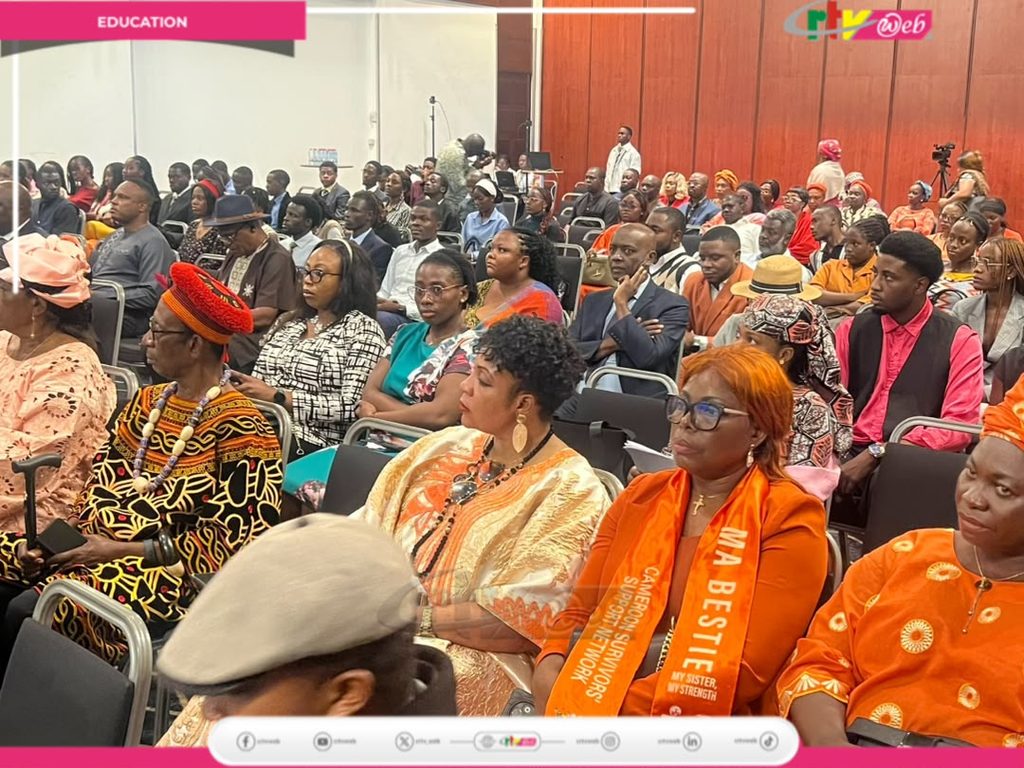
  • Gender Based Violence: How to Seek Help

    Early Warning Signs :

    Sudden withdrawal from friends, family, or social life.

    – A visible shift in personality from confident to anxious, hyper vigilant, or withdrawn.

    – Unexplained bruises, especially on the arms, wrists, neck, or face, often covered up or explained away as accidents.

    – Visible fear of a partner’s reaction to being late, missing a call, or making a small mistake.

    Experts urge that once a women is noticed to be in such situations, the first step is to speak to the victim privately and help her find support via a trusted relative, a religious leader, a specialized NGO, or a police / gendarmerie gender desk.

    According to Barrister Edwan, women should not wait for physical violence before seeking help.“Threats, stalking, harassment, and intimidation can absolutely be reported before physical violence occurs.

    Waiting for physical violence to occur is not required to seek protection or legal intervention.

    Go to a police station, or a gendarmerie brigade or call for help using the till free numbers:

    – Police: 117

    – Gendarmerie: 113

    – Ambulance/SAMU: 119

    According Jean Roger Ndebi, “The Ministry of Women’s Empowerment and the Family also has departmental delegation and call centers with toll-free number: 1166. The Commission of Human Rights in Cameroon that can also help. They have toll-free numbers 11 and 13.

    If you can’t call, experts suggest you make noises. Scream, alert neighbors, shame should never outweigh safety.

    BUILDING A SAFETY PLAN

    Legal experts also reiterate that there is no need to wait for physical violence.Under Article 301 of Cameroon’s Penal Code, threats alone can form the basis of a criminal complaint.

    Under Article 308 of the Criminal Procedure Code, offenses can be established « by any means of proof » — meaning documented threats, messages, and witness accounts all matter.

    WHERE TO SEEK HELP IN CAMEROON

    Here are a list of some places experts say victims of abuse can turn to in Cameroon, Police gender desks and gendarmerie brigades, some stations now have units meant to handle GBV complaints with more confidentiality; both experts urge insisting on this if available.

    Ministry of Women’s Empowerment and the Family, departmental delegations and social centers in most subdivisions, plus the Centre National de Promotion des Femmes in Yaoundé.

    The One Stop Centre for Victims of Domestic Violence, under the same ministry (availability varies by region). National Commission on Human Rights and Freedoms also runs toll-free reporting lines.

    UN Women Cameroon — provides legal aid and temporary shelter support in some cases. Jean Roger Ndebi, Social Worker, also pointed to civil-society organizations that provide support to survivors. “Associative movement like Action for Welfare and Peace,” he said, adding that “many other NGOs are doing excellent work on the field.”

    He also cited Women in Action and UN Women in Cameroon, which he said provide “lasting legal and temporary shelter.”

    Cynthia Ibong Sabtala

  • Eight Women Killed In Less Than 10 Days: Recognizing The Warning Signs

    At least eight cases involving women killed in violent or suspicious circumstances have been reported over roughly eight days in August.

    The Ministry of Women’s Empowerment and the Family told the National Assembly in June that around 50 femicides had already been recorded in the first four months of 2026; civil society groups now estimate the year’s total has passed 60 — higher than the same period in 2024 and 2025.

    WHAT HAPPENED THIS MONTH:

    -Yaounde–Nsimalen Highway (Aug 11): Kenfack Fortune was ejected from a speeding vehicle and died of her injuries hours later.

    – Efoulan, Yaounde (Aug 8–9): Diane Yidi Ebabi, 19, was strangled by her boyfriend following a dispute; he kept her body in his room for two days before burying it in a pit. He was arrested nine days later and confessed.

    – Tsinga, Yaounde (Aug 21): A woman, mother of three, was killed and decapitated; her body was found hidden under the bed. Her partner fled with the children to Kumba, in the South West Region, before being arrested.

    – Douala,  (Aug 22): 34-year-old Modestine, was killed with a butcher’s knife by her husband in front of their two young children after he barricaded the doors from inside. Her body bearing multiple deep wounds, one of her hands almost severed.

    – Near Meiganga, Adamaoua Region: Rougaïatou Saidou, 38, a trader, disappeared in late July; her body was later found buried near an abandoned house. A suspect, now known to be her companion has confessed to the act.

    – Mefou-et-Afamba: A young woman was found dead on a road in what investigators believe was a killing staged to resemble a traffic accident.

    – Belabo,  Est Region: A young woman was found raped and killed; her attacker has not been identified.

    – Yaounde (Aug 26): Beguel Crescence Merline, 44, was found in a hotel room with  stab wounds ay her throat, apparently by a man she met online.

    RED FLAGS THAT PRECEDE VIOLENCE — WHAT TO WATCH FOR IN A PARTNER

    All these incidents  paint a disturbing picture of violence that seem to mostly target women. According to Barrister Edwan Ngum Tebe, lawyer and gender-based violence activist, violence does not necessarily begin with physical assault. In an Interview, she states,  there are warning signs women and their loved ones should not ignore.

    “Some red flags in partners include extreme control: you have a partner who demands access to phones, regulating your dressing choices, or barring you from visiting family or working. Those are red flags. Hyper-jealousy: accusing her of infidelity without cause, and monitoring her movements or locations constantly. We also have explosive anger: breaking objects, punching walls, or making direct or indirect threats to her life or her children’s safety.”

    Barrister Edwan Ngum Tebe

    Women must be vigilant then and watch out for

    Extreme control and jealousy, escalating aggression starting with insults, moving to pushing, then slapping, then choking.
    Explosive anger directed at objects punching walls, breaking things, brandishing weapons to intimidate, even without direct physical contact.
    Death threats including indirect ones,
    Financial control, shifting blame insisting she is responsible for provoking his anger or violence.
    A sense of ownership language and behavior, Isolation, cutting a woman off from friends, family, religious or community networks.

    Another human Rights Activist and Social worker, Jean Roger Gerard Ndebi, states, prevention begins with recognizing the warning signs and refusing to remain silent.

    Jean Roger Ndebi

    Social Worker / Human Rights Activist

    “These are the red flags that precede 90% of feminicide, he noted.

    According to both experts,  femicide, often follows months of imposed isolation and more often, when a woman announces she is leaving. This moment requires the highest level of caution and support.

    Cynthia Ibong Sabtala

  • Mondial féminin 2027 : Rio de Janeiro accueille le tirage au sort le 11 décembre 2026

    Mondial féminin 2027 : Rio de Janeiro accueille le tirage au sort le 11 décembre 2026

    Les 32 meilleures nations de la planète, dont le Cameroun, connaîtront leurs adversaires dans le cadre mythique du Musée d’Art Moderne de Rio de Janeiro, au Brésil. Un rendez-vous historique pour la toute première Coupe du monde féminine organisée en Amérique du Sud.

    C’est désormais officiel : la FIFA a tranché. Le vendredi 11 décembre 2026, les yeux du monde entier seront rivés sur la baie de Guanabara et le Pain de Sucre, toile de fond du célèbre Musée d’Art Moderne de Rio de Janeiro (MAM Rio). C’est dans ce haut lieu de la culture brésilienne que se tiendra le tirage au sort final de la Coupe du Monde Féminine de la FIFA 2027™.

    Le temple du futebol arte pour tracer la route des reines

    Le choix du MAM Rio n’est pas anodin : il rend hommage au concept du futebol arte, cette vision créative et spectaculaire du jeu qui résonne particulièrement avec l’identité du football africain et camerounais. Devant plus de 1 000 invités et délégations venues des quatre coins du globe, les groupes des 32 équipes en lice et le calendrier des 64 rencontres réparties dans 8 villes hôtes seront définitivement scellés. Près de 800 000 personnes ont déjà fait part de leur intérêt pour les billets et plus de 95 000 ont exprimé leur souhait de participer en tant que volontaires.

    Un gratin mondial réuni au cœur de la « Cité merveilleuse »

    En dehors des délégations des nations déjà qualifiées et des sélections encore en lice pour le tournoi de barrages (Play-Off Tournament) prévu en février 2027, les autorités locales, les parties prenantes, les partenaires commerciaux ainsi que les représentants des médias du monde entier feront le déplacement. L’heure exacte du tirage au sort en direct sera communiquée ultérieurement par l’instance faîtière du football mondial. À l’issue de la cérémonie, la FIFA dévoilera le calendrier officiel mis à jour de la compétition, attribuant chaque affiche de la phase de poules à sa ville hôte (Host City) et fixant définitivement les horaires des coups d’envoi.

    32 places pour l’histoire : le découpage des forces par continent

    Au total, 32 nations prendront part à cette phase finale de la Coupe du Monde Féminine de la FIFA 2027 au Brésil. Sur ce total, 29 pays se qualifient directement via leurs éliminatoires confédérales, le pays hôte (le Brésil) occupe une place réservée, et les 3 derniers billets seront attribués à l’issue d’un tournoi de barrages intercontinental réunissant 10 équipes.La répartition exacte des places directes et des barrages par continent s’établit comme suit :

    • Afrique (CAF) : 4 places directes (dont le Cameroun) + 2 places en tournoi de barrages• Europe (UEFA) : 11 places directes + 1 place en tournoi de barrages

    • Asie (AFC) : 6 places directes + 2 places en tournoi de barrages

    • Amérique du Nord, Centrale et Caraïbes (CONCACAF) : 4 places directes + 2 places en tournoi de barrages

    • Amérique du Sud (CONMEBOL) : 3 places directes (incluant le Brésil, pays hôte) + 2 places en tournoi de barrages

    • Océanie (OFC) : 1 place directe + 1 place en tournoi de barrages

    Le Cameroun prêt à rugir en Amérique du Sud !

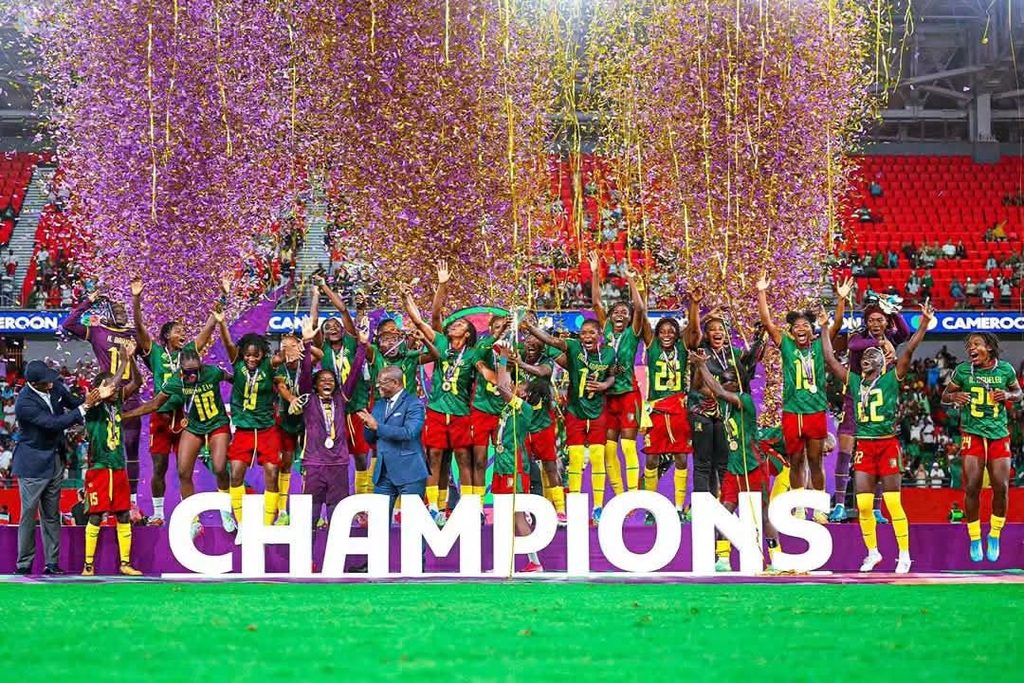
    Marche des Lionnes indomptable avant un match crucial lors de la CAN féminine Maroc 2026

    Ce rendez-vous au MAM Rio est bien plus qu’un simple tirage au sort : c’est le grand saut vers une aventure historique. Après avoir brillamment validé leur qualification et confirmé leur retour au sommet du continent, nos Lionnes Indomptables n’attendent plus que de connaître leurs trois adversaires de la phase de poules.Sur le banc, la vision tactique du staff et l’exigence du groupe insufflent une dynamique conquérante. Sur le terrain, la magie opère grâce à ce savant mélange entre le leadership de nos cadres emblématiques — à l’instar de l’infatigable capitaine et attaquante Gabrielle Aboudi Onguéné — et la fraîcheur débordante des pépites révélées par la Guinness Super League.Pour le football féminin camerounais, l’enjeu est colossal. Les Lionnes s’apprêtent à disputer la troisième phase finale de Coupe du Monde Féminine de leur histoire, après les éditions mémorables de 2015 au Canada et de 2019 en France. Lors de ces deux premières incursions mondiales, le Cameroun avait forcé le respect de la planète football en franchissant chaque fois le premier tour pour se hisser en 8es de finale — portées en 2015 par le festival de Gaëlle Enganamouit contre l’Équateur (6-0) et en 2019 par le doublé salvateur d’Ajara Nchout face à la Nouvelle-Zélande (2-1).Aujourd’hui, forte de cet héritage et du glorieux parcours continental qui a fait chavirer le pays, la sélection aborde ce rendez-vous brésilien avec de tout autres ambitions : franchir ce fameux cap des 8es et prouver que la hemlé camerounaise peut faire trembler n’importe quelle puissance mondiale.

    Carmen Olivia Bilé

  • AFCON 2025 : Qualifiers to start on September 21,2026.

    The qualifiers for the 2027 Africa Cup of Nations will kick off on September 21, 2026.

    Organized by the Confederation of African Football (CAF), 48 nations have been drawn into 12 groups of four and will play across three FIFA windows:

    Matchdays 1 and 2 from September 21 to October 6, 2026, Matchdays 3 and 4 from November 9 to 17, 2026, and the final Matchdays 5 and 6 from March 22 to 30, 2027.

    In most groups the top two teams will advance to the 24-team tournament, but because Kenya, Uganda, and Tanzania are co-hosts and already qualified, only one additional team will qualify from each of their groups.

    The finals, branded TotalEnergies CAF AFCON PAMOJA 2027, are set for June 19 to July 17, 2027 in East Africa.

  • Paul Biya est de retour à Yaoundé

    Le chef de l’État et son épouse, Chantal Biya, ont reçu un accueil chaleureux, ce 20 août à l’aéroport international de Yaoundé-Nsimalen.

    Parmi, les personnalités présentes au bas de la passerelle pour l’accueillir, le ministre d’État, ministre, Secrétaire général de la présidence de la République, Ferdinand Ngoh Ngoh et le Premier ministre, chef du gouvernement, Joseph Dion Ngute. À l’extérieur du pavillon présidentiel, les Camerounais de tous bords, groupes de danse et militants du Rassemblement démocratique du peuple camerounais (RDPC), sont mobilisés en grand nombre. Leur leitmotiv, la joie de revoir le père de la nation, souhaiter une chaleureuse bienvenue  au couple présidentiel et surtout le voir de près. 

    Ferveur populaire

    Elle est perceptible à l’aéroport et le long de l’itinéraire du cortège présidentiel. Militants et citoyens ordinaires saluent le passage du couple présidentiel. Sur leur visage, l’on peut lire l’enthousiasme  de voir le chef de l’État et son épouse de retour au pays après de nombreuses spéculations au sein de l’opinion visant à discréditer l’image du président de la République.  La présence physique du chef de l’État vient ainsi dissiper des doutes et autres entreprises de désinformation. En effet, c’est le 7 juin 2026 que le couple présidentiel avait quitté le Cameroun pour un séjour privé en Europe. 

    L’opinion nationale est donc rassurée. Paul Biya est là et entend œuvrer davantage pour la marche de la nation. 

    Dieudonné Zra

  • Enseignement privé de base : l’État durcit le contrôle des établissements

    À l’approche de la rentrée scolaire 2026/2027, le secteur de l’enseignement privé de base fait l’objet de nouvelles mesures de contrôle. Réunie les 17 et 18 août 2026 à #Yaoundé sous la présidence du ministre de l’Éducation de base, Pr Laurent Serge Etoundi Ngoa, la 21ᵉ session a débouché sur deux mesures fortes : la fermeture de 803 établissements clandestins et la suspension, pour trois mois renouvelables, de la création de nouvelles écoles primaires privées.

    Cette décision traduit la volonté des pouvoirs publics d’assainir un secteur confronté à plusieurs dysfonctionnements. Les 803 établissements concernés sont répartis dans six régions du Cameroun : l’Adamaoua, le Centre, l’Est, le Littoral, l’Ouest et le Sud. Ils ont été fermés pour exercice clandestin de leurs activités et manquements graves aux dispositions légales et réglementaires. Les établissements visés ne pourront reprendre leurs activités qu’après régularisation de leur situation administrative et sur instruction du ministre de l’Éducation de base.

    Assainir avant d’autoriser

    Le ministère de l’Éducation de base justifie cette suspension par plusieurs irrégularités constatées dans le secteur. Dans une correspondance signée le 10 août 2026, le Minedub évoque notamment la précarité de certaines infrastructures, le non-respect des normes pédagogiques et la circulation de faux arrêtés. La période de suspension doit ainsi être consacrée à l’assainissement du secteur, en collaboration avec les fondateurs et les organisations de fondateurs d’établissements privés. Au-delà de ces mesures, la Commission a recommandé une révision et une actualisation du cadre réglementaire de l’enseignement privé, notamment avec l’intégration de la dématérialisation.

    Une rentrée sous surveillance

    À travers ces mesures, l’État entend renforcer la transparence, améliorer la qualité des apprentissages et mieux encadrer les établissements privés. En juillet 2024, 722 établissements non conformes avaient déjà été fermés. Le secteur de l’enseignement privé de base devra désormais s’inscrire dans un cadre plus strict, avec la perspective d’aller vers le régime de l’autorisation préalable. Cette réforme prévoit qu’un opérateur ne pourra débuter son activité qu’après avoir obtenu un document officiel de l’État, alors que l’enseignement privé est actuellement régi par le régime de la déclaration.

    Rosalie Abeng (stagiaire)

  • Cameroon Charts Stronger Response to Human Trafficking at National Consultation

    Cameroon Charts Stronger Response to Human Trafficking at National Consultation

    For two days, government officials, United Nations agencies, civil society organisations, development partners and survivors of human trafficking gathered in Yaoundé to examine one of the most pressing migration challenges facing Cameroon: trafficking in persons and the smuggling of migrants.

    Organised by the Platform for Dialogue and Exchange between the Government and Civil Society, in partnership with the International Organization for Migration (IOM), the national consultation ended with a series of recommendations expected to shape Cameroon’s first National Migration Policy.

    The discussions highlighted persistent challenges, including weak institutional coordination, inadequate data collection and sharing, limited resources for victim assistance, evolving criminal networks and the growing use of digital platforms by traffickers.

    Survivor’s testimony puts a human face on trafficking

    One of the most emotional moments of the consultation came when survivor Rose Kanjo recounted her experience after being trafficked to Kuwait in 2015.

    Promised a teaching job by a relative, she instead found herself trapped in domestic servitude.

    “I worked 19 to 20 hours every day. I slept on the floor, ate leftovers, had no access to a phone and endured physical, emotional and sexual abuse,” she told participants.

    Although her family eventually paid a ransom of 4,000 US dollars, Kanjo said she still had to devise a way to recover her passport and escape from her employer before returning to Cameroon.

    Her testimony served as a stark reminder of the realities behind fraudulent overseas recruitment schemes and reinforced calls for stronger prevention and protection measures.

    A roadmap for stronger action

    Participants agreed that trafficking in persons and migrant smuggling should become a priority pillar of Cameroon’s future National Migration Policy.

    Recommendations adopted during the consultation include strengthening national coordination mechanisms, reviewing the legal framework to better align with international standards, improving the collection and sharing of migration data, increasing sustainable funding for anti-trafficking programmes and establishing a harmonised national referral system for victims.

    Delegates also called for nationwide awareness campaigns, particularly in vulnerable communities and border areas, while recommending the integration of migration and anti-trafficking modules into the training of magistrates, security personnel, social workers and other frontline professionals.

    The consultation further stressed the need for comprehensive assistance to victims, including medical, psychological, legal and economic support, alongside programmes that promote long-term reintegration.

    United Nations unveils child protection initiative

    Representing the United Nations System in Cameroon, officials warned that conflicts, displacement, poverty and climate-related pressures continue to increase children’s vulnerability to trafficking, particularly in the North-West and South-West regions.

    The UN announced plans for a new project targeting children exposed to trafficking and exploitation in the two regions. Under the leadership of the Ministry of Social Affairs, the initiative is expected to directly benefit nearly 3,000 people while positively impacting about 15,000 others, including families and communities.

    The project will focus on expanding child protection services, preventing online-facilitated trafficking, strengthening victim identification and referral mechanisms and improving the capacity of institutions responsible for investigations and prosecutions.

    In a joint declaration marking the World Day Against Trafficking in Persons, the United Nations Migration Network in Cameroon also called for multidisciplinary victim support centres, stronger legal reforms, improved law enforcement capacity and greater collaboration among public institutions, civil society and local communities.

    Government pledges sustained commitment

    Closing the consultation, the Minister of Social Affairs, Pauline Irène Nguene, described trafficking in persons as an established reality in Cameroon that requires coordinated national action.

    She acknowledged that while assistance to victims remains essential, greater emphasis must also be placed on prosecuting traffickers and dismantling criminal networks.

    The minister announced that the recommendations from the consultation will feed into the finalisation of Cameroon’s National Migration Policy and guide future sectoral interventions.

    She also welcomed the continued support of the International Organization for Migration, notably its commitment to expand the migrant transit and reception centre to improve services for vulnerable migrants.

    As Cameroon commemorates the World Day Against Trafficking in Persons, the outcomes of the consultation reflect a growing determination among government, international partners and civil society to move beyond dialogue and strengthen concrete action against a crime that continues to threaten the country’s most vulnerable populations.

    Bruno Ndonwie Funwie

  • ECA: African Experts Set to Fast-track Operationalisation of AfCFTA

    ECA: African Experts Set to Fast-track Operationalisation of AfCFTA

    The effective implementation of the African Continental Free Trade Area has once again taken centre stage as experts from across the continent gather in Yaounde to identify practical measures for accelerating Africa’s economic integration.

    Convened by the United Nations Economic Commission for Africa, the four-day workshop is focusing on eliminating non-tariff barriers, modernising customs systems, strengthening regional value chains, and promoting industrial transformation to unlock the full potential of intra-African trade.

    Participants are also exploring strategies to empower small and medium-sized enterprises, women, and young entrepreneurs, whose active participation is essential to building an inclusive, competitive, and prosperous continental market.

    For Cameroon, the meeting presents a strategic opportunity to consolidate its position as a regional trade hub while contributing to the successful implementation of the African Continental Free Trade Area and Africa’s broader vision of economic integration.

  • Commonwealth Games: Emmanuel Eseme Alobwede wins Gold for Cameroon

    Emmanuel Eseme Alobwede, of the Cameroonian delegation to Glasgow has won the gold medal in the men’s 100m final at the 2026 Commonwealth Games.

    He grabbed the victory during a rainy final at Scotstoun Stadium, with a record of 9.83 seconds.

    The Cameroonian set a new Commonwealth Games Record, and a new National Record for Cameroon.

    His victory also marks a historic milestone for Team Cameroon.
    Prior to the final, Eseme had already won the semifinal in 9.89 seconds.

    Men’s 100m Final Results

    🥇 1st : Emmanuel Eseme, 🇨🇲 Cameroon, 9.83s, Games Record / National Record

    🥈 2nd : Lachlan Kenney, 🇦🇺 Australia, 9.85s, Area Record

    🥉 3rd : Kayinsola Ajayi, 🇳🇬 Nigeria, 9.90s, Personal Best

    4th: Gift Leotlela, 🇿🇦 South Africa, 9.91s

    Additional Athlete Results

    Adèle Mafogang

    She officially opened her multi-event campaign on Day 3. She completed her first event, the 100m Hurdles, in 14.80 seconds, securing her initial 868 points. She later advanced through the high jump stage as the heptathlon events continue.

    Emmanuel Itoungue (Men’s 100m):

    He was unfortunately a non-starter due to a forfeit ahead of the 100m rounds, shifting Team Cameroon’s short-sprint focus entirely onto the men’s 100m race.

  • Commonwealth Games 2026: Timid Start for Team Cameroon

    This Monday July 27 was Day 2  for Team Cameroon at the ongoing Commonwealth Games. Athletics was on board this Monday with three athletes Programmed. Emmanuel Itoungue in the Men’s 100m series did not compete . He simply did not start because of an injury sustained during the warm up session..

    In the Men’s Long Jump qualifications, in Group A, Nkwemy Raymond was 7th with a jump of 7.57m out of 10 athletes.
    In Group B, Yinra Appolonaire was 8th with a jump of 7.27m out of 10 athletes. Both Appolonaire and Nkwemy failed to emerge amongst the first 12, and consequently failed to qualify for the final in the men’s long jump.                                 

    This Tuesday July 28, Adele Mafogang will compete in the qualifiers of the women’s Heptathlon, Emmanuel Eseme Alobwede, will be on for the Men’s Semi finals 100m at 19h10, while preparing to be back for the final in the men’s 100 m at 21h14