Catégorie : News

  • Cameroon Senate: Pioneer President Marcel Niat Njifenji Passes On

    The Upper house of Parliament is in mourning since the announcement of the passing into eternity of Senator Marcel Niat Njifenji, this Saturday, April 11, 2025.

    The Senator from the West Region, was pioneer President of the Senate since the Upper house of Parliament went operational in 2013. He served for 13 years as President of the Senate, from 2013 to March 2026.

    Born in 1934, Marcel Niat Njifenji passed away in Yaoundé, following a protracted illness.

    The civil engineer by training, played a key role in shaping the political landscape of the country, especially through his office, as President of the Senate.

    Before becoming a Senator, being among the 30 appointed by the President of the Republic, Marcel Niat Njifenji had served the nation for decades, holding high-ranking administrative positions.

    Some of the positions include:

    • Director General of the National Electricity Company of Cameroon (Sonel);
    • Minister of Planning and Regional Development;
    • Deputy Prime Minister in charge of Mines, Water, and Energy.

    In the political sphere, Marcel Niat Njifenji also served as Mayor of Bangangté in the West Region from 2002 to 2007, before being appointed Senator on May 8, 2013, among the pioneer senators and later elected President of the Senate on June 12 of the same year becoming the first to hold the position following the setting up of the upper house of Parliament.

    He was also active in promoting social and humanitarian activities especially in the areas of human development.

    Elvis Teke

  • Marche sportive du Travail

    Marche sportive du Travail

    Lancement officielle ce dimanche 26 avril 2026, des activités de la 140e journée internationale du travail avec une marche sportive. Conduite par Grégoire Owona, le ministre du Travail et de la Sécurité sociale, la marche de ce dimanche regroupe les responsables et personnels de nombreuses administrations privées et publiques du pays.

    Rappelons que cette année, la célébration est placée sous le thème : « Dialogue social et travail décent, facteurs de paix, de cohésion nationale et de développement »

    IWD2026

    FIT2026

    Travail

  • OMC: des Camerounais dans des postes stratégiques

    OMC: des Camerounais dans des postes stratégiques

    Ils occupent des postes de représentation nationale auprès de cette institution dont le secrétariat technique permanent est composé de fonctionnaires internationaux.

    De ce fait, le Cameroun occupe une place active au sein de l’Organisation Mondiale du Commerce (OMC). Ses principaux acteurs et représentants sont :

    -Salomon Eheth : Ambassadeur et représentant permanent du Cameroun auprès de l’Office des Nations Unies à Genève. Il préside le Groupe de travail de l’OMC sur le Commerce et le Transfert de Technologies (WGTTT) depuis le 16 juillet 2025.

    -Luc Magloire Mbarga Atangana : Ministre du Commerce, acteur clé dans les négociations sur l’agriculture et le développement.

    -Thomas Ndongo Onana : Premier secrétaire à la Mission permanente du Cameroun à Genève.

    -Georges Stéphane Etoh : Membre de la Mission permanente du Cameroun à Genève. 

    Rôle stratégique du Cameroun à l’OMC

    Aussi, le Cameroun se distingue-t-il  par le leadership politique et technique de ses diplomates dans les négociations.

    -Présidence de comités : Salomon Eheth assure un leadership sur les questions de transfert de technologies, un enjeu crucial pour le développement.

    -Diplomatie commerciale : La mission camerounaise à Genève défend activement les intérêts du pays, notamment sur le commerce électronique et le développement.

    -Hôte de la CM14 : Le Cameroun se positionne comme un leader africain en organisant la 14ème Conférence Ministérielle de l’OMC en 2026, un événement crucial pour la réforme du commerce mondial. 

    Notons que L’Organisation mondiale du commerce (OMC) est la seule organisation internationale à vocation mondiale, qui s’occupe des règles régissant le commerce entre les pays. 

    Source: site OMC

  • Cameroon Explores AI’s Potential in Revolutionizing Healthcare

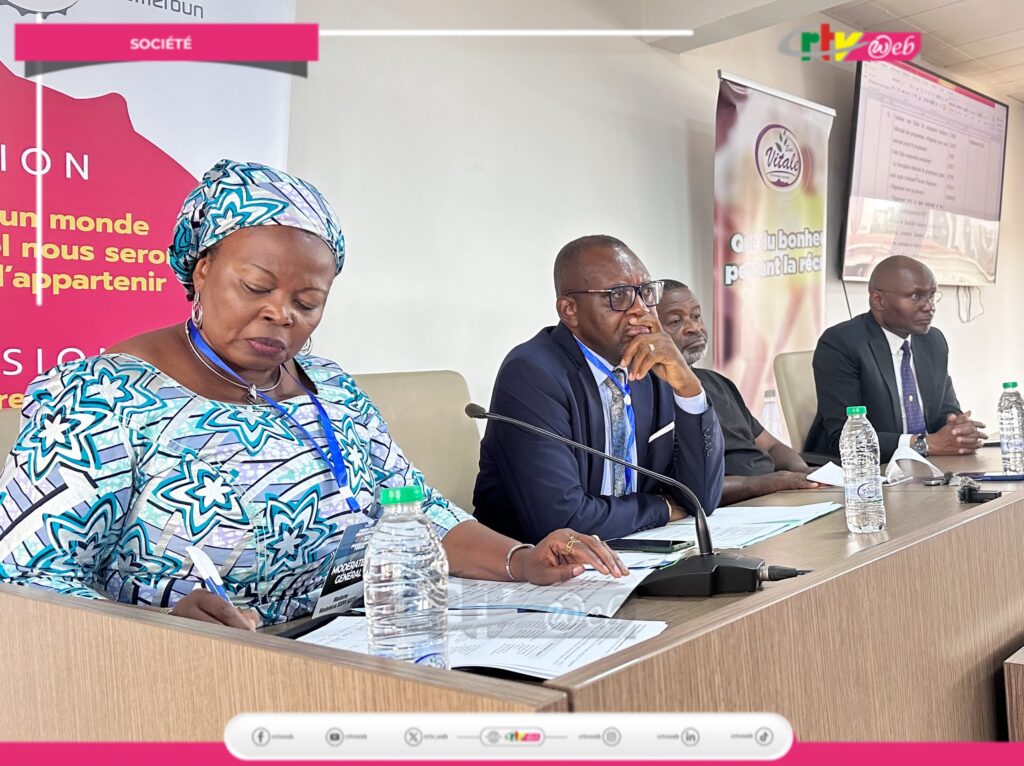
    Cameroon is harnessing AI to improve disease prevention, patient monitoring, and treatment efficiency through initiatives like Matipla Digital Health’s AI-powered app, showcased at a Science Outreach conference in Yaoundé on April 8, 2026.

    The Ministry of Scientific Research and Innovation hosted the event, focusing on « Harnessing Artificial Intelligence: Improving Prevention, Patient Monitoring, and Treatment Efficiency » in Cameroon. Professor EBELLE ETAME Rebecca Madeleine, Secretary General of the Ministry, highlighted AI’s role in modernizing healthcare.

    Jean Guy NLOGA, Founder and CEO of Matipla Digital Health, presented the app’s features, including a digital « health book », practitioner contact, and daily health tips. The initiative aligns with President Paul Biya’s vision to improve Cameroonians’ living conditions.

    The conference was part of the Ministry’s « Research Month » activities, promoting research results dissemination and innovation. Matipla Digital Health’s initiative is expected to enhance healthcare delivery in Cameroon, empowering patients and healthcare providers with AI-driven solutions.


    Che Tembuck

  • 𝐂𝐌𝟏𝟒 : pari tenu pour Yaoundé

    La grand messe de l’Organisation mondiale du Commerce s’est refermée ce 29 mars 2026 avec des avancées enregistrées malgré des secteurs qui connaissent encore quelques blocages.

    C’était à l’issue de quatre jours de travaux intenses qui se sont déroulés du 26 au 29 mars au palais des Congrès de Yaoundé. Y ont pris part, plus de 4 000 délégués issus de 166 pays membres dont le Cameroun avec le ministre du Commerce, Luc Magloire Mbarga Atangana, président de cette 14e Conférence ministérielle de l’OMC et avec la présence remarquée de la Directrice générale de l’Organisation, Ngozi Okonjo-Iweala.

    Premières conclusions

    Ces acteurs ont donc été mobilisés pour discuter des points aussi stratégiques que : l’agriculture et la sécurité alimentaire, l’accès des pays les moins avancés aux technologies numériques et la protection des secteurs vitaux pour les économies africaines.

    C’est dans ce sens que l’on retiendra notamment la déclaration de la Directrice générale pour qui le nouveau paquet de Yaoundé que les membres ramèneraient à Genève comprend les éléments suivants:

    -Le projet de Déclaration Ministérielle de Yaoundé sur la Réforme et le Plan de travail de l’OMC;

    -Le projet de Décision ministérielle sur le Commerce électronique;

    -Le projet de Décision ministérielle sur le Moratoire sur les Plaintes de Non-violation et de situation de l’Accord sur les ADPIC;

    La finalisation de cet ensemble de mesures « constituerait une réalisation considérable », selon la Directrice générale qui déclare : « Nous ne devrions pas le laisser sur la table. »

    A la fin de la conférence, les ministres ont pris l’engagement de poursuivre les travaux à Genève sur les principales questions en suspens.

    Aline-Florence Nguini

  • Cameroon Gears Up to Host, 16th Commonwealth Regional Conference of Anti-Corruption Agencies

    On April 7, 2026, Cameroon launched two key committees ahead of the 16th Commonwealth Regional Conference of Anti-Corruption Agencies in Africa (CONAC).

    The Interministerial Organising Committee and the Conference Communication Plan, were officially inaugurated as part of preparations marking the May 4–8, 2026, event in Yaoundé.

    The Chairman of CONAC, Rev. Dr. Dieudonné Massi Gams, has urged the committees to work with unity, foresightness professionalism, team spirit, and integrity, highlighting their mission to ensure smooth logistics, facilitate institutional collaboration, guarantee efficient protocol arrangements, and create an environment for productive dialogue among delegations.

    The conference will hold under the theme “Deploying Artificial Intelligence in the Fight Against Corruption in Commonwealth Africa,” a historic turning point as AI reshapes economies, governance systems, and societal functions.

    According to the chairman, while technology plays a key role, its effectiveness depends on ethical governance, institutional collaboration, and human responsibility.

    The preparations aim at engaging, not only experts, but also young people, civil society, and ordinary citizens, whose daily lives are directly affected by governance outcomes and corruption.

    The Communication Plan is designed to inform, engage, and inspire participants and the public, building anticipation, understanding, and collective commitment ahead of the conference, which is expected to host over 200 participants from more than 25 countries.

    Egoh Yvonne (Intern)

  • Basic Education: Timetable for Official Exams unveiled

    A total of 582,092 pupils have registered for national examinations organized by the Ministry of Basic Education nationwide.

    The exams are scheduled to begin on May 5, 2026 with the practical session of the First School Leaving Certificate (FSLC).

    It will be followed by the physical exercise sessions that will run from May 6 to 8.

    The Common Entrance Examination is set to begin on May 13.

    The written phase of the Certificat d’Etudes Primaires (CEP) and the FSLC will begin simultaneously on June 16.

    The information was made public during a coordination meeting of officials from the central and devolved services in charge of examinations and competitive entrance tests at the Ministry of Basic Education held this Tuesday April 7, 2026.

    The coordination meeting sought to evaluate the state of preparations for the 2026 competitive entrance examinations.

    The information was disclosed in the presence of the Secretary of State to the Minister of Basic Education, Vivian Asheri Kilo during the five-day gathering that also focused on developing provisional budgets to control spending, ensuring the inclusiveness of exams, and laying the groundwork for the digitalization of competitive exams in future sessions.

    Elvis Teke

  • Violence on Women and Children: How do Cameroonians Rise Above this Scourge ?

    It is a sunny afternoon in March, downtown Yaounde, following a heavy downpour yet the proverb which says « after the rain comes sunshine » seems to be surreal as hearts are broken, tears rolling down cheeks, and many cry out, « Not again! ».

    Yes, not again to another tale of rape and killing of a little girl; not again to another woman murdered by her partner; not again to the bodies of girls found lifeless on the street; not again to another pupil or student missing, and missing notices of these people all over social media.

    The situation is alarming to Cameroonians, especially residents of major cities where the population wakes up to such heartbreaking stories almost daily.

    The questions on many minds are what is going on…what went wrong?

    Understanding the Triggers of Such Violence

    With the recurrent headlines of femicide, rape, infanticide, and missing children, a Psychologist, Vivian Meme, indicates that these are not just isolated incidents. In her opinion, « They are symptoms of deep-seated social fractures ».

    To seek solutions to this problem, the experts says one must first confront the uncomfortable truth of why this continues to happen…What is the core problem?

    Vivian Meme adds that the problem is not just a single cause but an intersection of several factors.

    The psychologist explains that dysfunctional or fractured homes constitute some of the reasons why all these prevail.

    « When the home which should be a sanctuary becomes a place of chronic conflict or neglect, it creates a fracture, » she says.

    Another reason that accounts for this violence is the normalization of violence.

    « Children in some environments are raised to believe that violence against girls or others is a « normal » part of life. When they witness abuse without consequence, they learn to view aggression as a legitimate way to resolve conflict or assert dominance, effectively training the next generation of perpetrators, » the Psychologist states.

    Then comes the issue of what she calls intergenerational trauma.

    « Violence is often a cycle. Without intervention, those who witness or experience abuse as children in fractured homes are at a higher risk of perpetuating it or becoming victims again as adults, » Vivian Meme remarks.

    « In addition to all these, deep-rooted gender biases and entitlement mindsets often lead to femicide, where women are targeted because of their gender or as a means of control, » she continues.

    Impunity and silence at the end of the day, also play a role in the upsurge of such heinous acts. « When crimes go unpunished or are treated as « private family matters, » perpetrators are emboldened, » Vivian Meme warns .

    A Future Beyond Violence

    Amid the tears of the affected, sympathisers and the community at large, the only question with a clear answer is « What is the way forward? »

    « For the families of victims, I will advise that they seek healing and justice. Firstly, they need trauma care. The grief following such acts is complex and heavy. Professional counseling and support groups are not a luxury; they are essential for survival, » The Psychologist advises.

    She also points to the need to demand accountability. « Engage with legal advocates and victim support organizations to ensure the case remains active. You do not have to carry the burden of the search for justice alone, » she insists.

    « Futhermore, break the stigma. There is no shame in being a victim or the family member of one. Speaking out helps dismantle the culture of silence that protects criminals, » encourages the Psychologist.

    To society, her advice is « Stay alert and be watchful! »

    « The bystander should move from being a passive observer to an active guardian. If you see signs of abuse, neglect or domestic tension, do not keep quiet; do something; blow an alarm; report it! » She adds.

    Education as a defence is also a key security measure.

    « Teach children about « body autonomy » and safe versus unsafe secrets. Knowledge is a child’s first line of defence against predators, » she advises.

    « Futhermore, as individuals, we should advocate for and support laws that prioritize child protection and harder penalties for gender-based violence. A society is only as safe as its most vulnerable member is. »

    Some Perpetrators of Violence Need Help

    These recommendations also concern the perpetrators of these crimes. Some of them do need help too, to break away from their practices.

    « Seek immediate intervention if you feel an impulse toward violence or abuse. Seek psychiatric help immediately before a life is lost, » Vivian emphasises.

    She also calls on perpetrators to understand the weight of their crimes. « A single act of violence destroys multiple lives: the victim’s, that of their families, and ultimately, yours, » she warns.

    The Psychologist who is also a Child Protection Expert adds that change begins when people refuse to look away. « By naming these acts for what they are (crimes against humanity), we begin the work of building a world where every girl and child can grow up in peace. »

    Social Media Ablaze with Need for Severe Sanctions

    Social media platforms like Facebook, X and WhatsApp are highly opinionated with many pointing towards severe sanctions on perpetrators of violence on women and children.

    While some Cameroonians have used social media to call on the law to handle the issues at hand, others clamour for « jungle justice ».

    In the meantime, some are precise about the kind of punishment needed…the death sentence…or castration followed by imprisonment.

    While competent authorities look into the cases already identified, Cameroonians hope justice will prevail and women and children will again have reason to smile and feel at ease in society.

    Eleanor Ayuketah Ngochi

  • Yaounde Hosts 14th Ministerial Conference of World Trade Organization: What Cameroon Stands to Gain


    From March 26 to 29, 2026, Cameroon will host the 14th Ministerial Conference of the World Trade Organisation (WTO) in Yaoundé. The conference, is the highest decision-making meeting of the global trade body.

    This major event will bring together trade ministers from over 160 countries. They will be in the country to shape the rules that govern international trade.

    Also worth noting is that it will be the second time an African country has hosted such a conference. Such conferences are often held in Geneva, which is the headquarters of the WTO and has the necessary logistics to hold such high-level meetings.

    However, things are beginning to change. In 2015, Nairobi (Kenya) hosted MC10 or the the 10th Ministerial Conference, which focused on global economic governance. Kenya yesterday and Cameroon today highlight the continent’s growing voice in international trade issues.

    The hosting of MC14 in Yaounde is a diplomatic honour for Cameroon and also a strategic opportunity.

    Direct economic benefits

    Thousands of delegates are expected in Yaoundé. They will boost hotels, transport, tourism, and local services. Preparations already include expanded accommodation capacity and training for hospitality workers to meet international standards.

    Cameroon gains international visibility and credibility.

    Hosting positions the country as a reliable partner in global trade diplomacy and strengthens its image as a destination for investment and business.

    Influence at the negotiation table

    As host — and with Cameroon’s Trade Minister chairing the conference — the country can help shape discussions that affect developing economies, particularly in Africa.


    Access to global markets under agreed rules


    More broadly, WTO membership itself gives Cameroon access to global markets under agreed rules, protection through a dispute settlement system, and opportunities to negotiate better trade conditions. Hold in mind that the WTO sets the rules on tariffs, subsidies, and trade practices — essentially “how the world buys and sells.”

    Several major issues are likely to dominate discussions. For example, in the area of agriculture and food security, developing countries will be pushing for fairer rules, especially on subsidies that disadvantage African farmers.

    Regarding the reform of the WTO system, which is another point on the agenda, members will debate how to modernise the organisation and restore its dispute settlement mechanism, which has faced challenges in recent years.

    The third and intriguing one is digital trade and e-commerce, which is not legislated so far. Digital trade is now a major part of global commerce; new rules are needed to govern online transactions and data flows.

    There is also the development and special treatment which African countries are seeking. They want stronger provisions that give them flexibility to grow their economies.

    Finally, the ministers will take on the question of fisheries and environmental sustainability. Building on past agreements, countries will discuss protecting ocean resources while supporting livelihoods. Today, multinational companies literally sweep, with impunity, water resources along coastlines where weak countries cannot do anything but painfully watch their coastal environments degrade.

    At the end of the day, MC14 comes at a critical time for the global trading system. For Africa — and Cameroon in particular — it is a rare chance not just to host the conversation, but to help shape the future of global trade.


    Che Tembuck

  • Pope Leo XIV Visits Cameroon in April 2026

    The Civil Cabinet of the Presidency of the Republic of Cameroon, has announced the head of the Roman Catholic Church, Pope Leo XIV to Cameroon from April 15 to 18, 2026.

    According to the release, the Pope will travel to Douala, Bamenda and Yaounde.

    The Holy See press office also indicated that the Pope will be on a ten day Apostolic Journey to Africa. He is scheduled to Algeria, Cameroon, Angola and Equatorial Guinea from April 13 to 23.

    An Apostolic Journey that will take him in the footsteps of Saint Augustine in Algeria, where he will visit Algiers and Annaba; then visiting Cameroon in Central Africa, with stops in Yaoundé, Bamenda and Douala; Angola, where he will visit Luanda, Muxima and Saurimo; and finally, Equatorial Guinea, where he will visit Mala, Mongomo and Bata.

    Papal Visits To Cameroon

    Pope Leo XIV is the third Sovereign pontiff to visit Cameroon after that of two popes have officially visited the country on three separate occasions:

    Pope John Paul II (1985): Visited from August 10 to 14, 1985. During this four-day trip, he traveled to Yaoundé, Douala, Garoua, and Bamenda.

    Pope John Paul II (1995): Visited for a second time from September 14 to 16, 1995. The primary purpose was the proclamation of the Post-Synodal Apostolic Exhortation, Ecclesia in Africa, in Yaoundé.

    Pope Benedict XVI (2009): Visited from March 17 to 20, 2009. This was his first trip to the African continent as Pope, during which he promulgated the Instrumentum laboris for the Second Special Synod for Africa.

    Pope Leo XIV: Early Life

    Pope Leo XIV, prior to his election was known as Cardinal Robert Francis Prevost. He was the Prefect of the Dicastery for Bishops.

    The 267th Bishop of Rome was born on September 14, 1955, in Chicago. He is the first Augustinian Pope, and the second Pontiff after Pope Francis to come from the Americas.
    He spent many years as a missionary in Peru before being elected head of the Augustinians for two consecutive terms.

    First Augustinian Pope
    The new Bishop of Rome , Illinois, to Louis Marius Prevost, of French and Italian descent, and Mildred Martínez, of Spanish descent. He has two brothers, Louis Martín and John Joseph.

    He spent his childhood and adolescence with his family and studied first at the Minor Seminary of the Augustinian Fathers and then at Villanova University in Pennsylvania, where in 1977 he earned a Degree in Mathematics and also studied Philosophy.

    On September 1 of the same year, Prevost entered the novitiate of the Order of Saint Augustine (O.S.A.) in Saint Louis, in the Province of Our Lady of Good Counsel of Chicago, and made his first profession on September 2, 1978. On August 29, 1981, he made his solemn vows.

    The future Pontiff received his theological education at the Catholic Theological Union in Chicago. At the age of 27, he was sent by his superiors to Rome to study Canon Law at the Pontifical University of Saint Thomas Aquinas (Angelicum).

    Elvis Teke